
In industrial fermentation, mechanically agitated fermenters are very important. They use mixing and aeration to create a good growth environment for microorganisms.
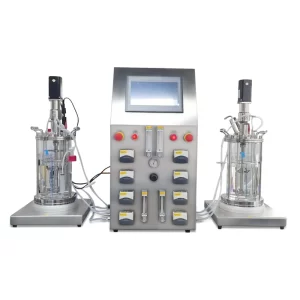
The height-to-diameter ratio of the vessel is usually between 1.7 and 4. This ratio affects oxygen transfer and also affects construction cost. The design pressure is usually 0.3 MPa. This helps keep the fermenter stable and safe during operation.
The design of agitators and internal parts helps oxygen dissolve into the liquid. At the same time, these parts improve mixing by creating strong liquid movement.
Sealing Performance and Ease of Use
Sealing performance is very important because it helps prevent contamination. Mechanical seals are used to reduce leakage while keeping the agitator running efficiently.
The inner surface of the fermenter is mirror-polished. This reduces material sticking. The connections use clamp-type fittings, so operation and cleaning are easier. Sensor ports and extra structures are added to support automatic control.
Working Principles and Structural Optimization of Fermenters
Mechanically agitated fermenters do one main thing. They make more oxygen mix into the fermentation liquid. They do this in two ways. Impellers break air bubbles into small pieces. Air distributors spread air around the liquid.
Fermenter performance is checked with two things. One is the oxygen transfer coefficient (KLa). The other is the power needed to move oxygen. You can control key details carefully. These details include pH, temperature, dissolved oxygen, and how fast the agitator spins. This control makes microorganisms work better. It also makes more product.
Customization and Automation
Biotechnology is growing fast. Fermenter design and use are changing in two ways. They are becoming more customized. They are also becoming more automated. Designers look at the microorganism’s traits. They also look at what the fermentation needs. They change the fermenter’s structure. This helps meet specific production goals.
Key Factors in the Design of Mechanically Agitated Fermenters
Height-to-Diameter Ratio
The height-to-width ratio of the fermenter matters a lot. It changes how well oxygen moves and is used. The usual range is 1.7–4. A higher ratio makes oxygen move better. It also makes the fermenter more expensive.
Design Pressure
Fermenters need the right design pressure. It is usually 0.3 MPa. The working pressure is below 0.15 MPa. This keeps operation safe and steady.
Agitators and Internal Structures
Agitator design is important. It helps oxygen mix into the liquid. People use many impellers together. They also use baffles and vertical tubes. These parts make the mixture swirl. They make mixing better.
Sealing Performance
Fermenters need good sealing. This is extra important for the agitator’s seal. Good sealing stops leaks. It also lowers the chance of contamination during growth.
Ease of Operation and Cleaning
Fermenters should be easy to use. They should be easy to clean. Mirror-polished inside surfaces and clamp connections help. They make using, cleaning, and fixing easier.
Heat Transfer Area
Fermenters need enough space to move heat. This lets them heat up fast. It lets them cool down fast. It stops nutrients from breaking down. It also keeps the temperature steady during fermentation.
Sterile Conditions
Sterility is done in several steps. These steps include sterilizing the vessel, filtering air to keep it clean, using good sealing, and keeping pressure high inside the fermenter.
Parameter Control
Good fermentation needs control of many things. These things include how fast air is added, dissolved oxygen, agitator speed, vessel pressure, pH, temperature, how fast materials are fed, how much biomass there is, and what is in the exhaust gas.
Automation and Intelligence
Automatic control systems are important. They help keep the process control precise. They help keep it steady.
Customization
Fermenters often need designs made just for them. This depends on the microorganism’s traits. It depends on what the fermentation needs.

Key Considerations for Selecting Agitator Designs
Oxygen Demand of Microorganisms
Aerobic microorganisms need more oxygen. Agitator design should make gas and liquid mix better. This makes oxygen move more.
Shear Sensitivity
Some microorganisms are easily hurt by strong mixing. Low-shear impellers are better for these. Examples are paddle or marine propeller types.
Fermentation Broth Viscosity
High-viscosity broths require stronger agitation. This maintains uniform mixing. Turbine impellers have higher shear forces. They may be more suitable for such systems.
Bubble Dispersion
Agitators should do one key thing. They should effectively disperse air into fine bubbles. This increases gas–liquid contact area. It also improves oxygen transfer efficiency.
Heat Transfer Requirements
Some fermentations generate significant heat. The agitator should facilitate uniform heat distribution. It should also enable efficient heat removal. This maintains temperature stability.
Suspension of Solid Particles
Some fermentations involve solid particles. The agitator must keep particles suspended. It should prevent settling.
Flow Pattern of the Agitator
The flow pattern (axial or radial) should match process requirements. Axial flow supports bulk mixing. Radial flow enhances bubble breakup and localized mixing.
Agitator Materials
Materials must resist chemical corrosion. This corrosion is encountered during fermentation. Materials should also comply with hygienic and food safety standards.
Agitator Size and Shape
The size and geometry of the agitator should match the fermenter dimensions. This optimizes mixing efficiency and fluid dynamics.
Number and Arrangement of Agitators
Large fermenters may require multiple agitators. Their arrangement should ensure uniform mixing. It should also eliminate dead zones.
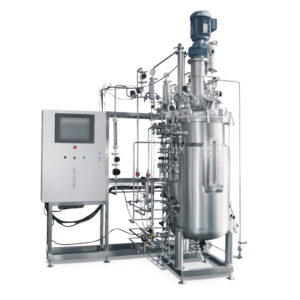
About Ferbio
Ferbio has extensive experience in the manufacturing of various reactors and pressure vessels. With an expert team spanning bioreactors, fermentation processes, mechanical manufacturing, and automation control, Bailun’s R&D and process capabilities consistently rank at the forefront domestically and at a world-class level internationally—delivering products that provide comfort, confidence, and peace of mind to our customers.