
As a core technology in the field of Traditional Chinese Medicine (TCM), TCM fermentation has thrived. It has evolved from the traditional wisdom recorded in ancient texts to the in-depth empowerment of modern science and technology. Research has confirmed that fermentation can enhance the efficacy of TCM. It can reduce toxicity, improve taste, and even endow TCM with new pharmacological effects. These facts make it a crucial breakthrough in the modernization of TCM.
1.Selecting high-quality strains is key to TCM fermentation.
There is a wide variety of microorganisms. Each has distinct metabolic enzyme systems and material bases. So not all strains are suitable for TCM fermentation. Traditional fermented Sojae Semen Praeparatum mostly uses natural bacteria. Fermentation with some endophytic fungi may produce harmful components. This poses potential safety risks. So it is necessary to selectively choose strains such as yeast and lactic acid bacteria. Bacillus subtilis var. natto, used in the fermentation of Astragali Radix, is the result of precise screening. It lays a solid foundation for TCM fermentation.
TCM fermentation has a diverse classification. By method, it can be divided into traditional natural fermentation and modern pure-strain fermentation. By technology, it includes liquid fermentation, solid fermentation and other types. Its products cover functional sugars, peptides and various other active substances. These classifications provide clear paths for TCM fermentation to meet different needs. They make its application in medical, food and other fields more targeted. They also promote the continuous expansion of its application scenarios.
2.Optimizing fermentation processes is crucial for the effectiveness of TCM fermentation.
Fermentation conditions involve multiple aspects. These aspects include strains, substrates, temperature and pH value. Different strains require different suitable conditions. Researchers did repeated experiments on Astragali Radix fermentation. They determined the optimal parameters through these experiments. The parameters are 13% Astragali Radix addition, 7-day fermentation period, 3mL inoculum size, and initial pH of 6.50. Comprehensive component analysis was carried out. It showed that glycosides decreased while aglycones increased in the fermented product. This change enhances the efficacy of the product. Scientifically optimized processes are the core guarantee for improving the quality and efficiency of TCM fermentation. They ensure each step of fermentation follows a regular pattern.
3.Innovative equipment has injected new vitality into TCM fermentation.
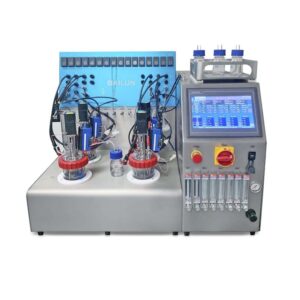
Traditional equipment has shortcomings. Integrated drying, crushing and fermentation equipment addresses these shortcomings. It improves efficiency. Frame-type stirring devices have another function. They solve the problem of high-viscosity material accumulation. Rapid fermentation equipment has its own advantage. It is suitable for industrial production. These devices tackle challenges from various dimensions. They provide hardware support for the large-scale and efficient development of it. They also facilitate the practical application of TCM fermentation technology.

4.The quality evaluation system is essential for the standardization of TCM fermentation.
There are technologies such as thin-layer chromatography and high-performance liquid chromatography. There are also intelligent detection methods like electronic tongues. These technologies and methods are combined. They have established a comprehensive quality monitoring network. A sound evaluation system can accurately control the quality of fermented TCM products. It ensures their safety and effectiveness. It also lays a foundation of trust for the market promotion of it.
5.TCM fermentation boasts significant advantages.
It saves TCM resources. It also protects the ecological environment. It has another benefit. It promotes the absorption of active components. It realizes the synergistic effect of TCM and probiotics. It can address diseases in the medical field. These diseases include tumors and liver disorders. It has broad potential in other industries. These industries include health products and cosmetics. Its multi-field application value demonstrates the strong vitality of TCM fermentation.
6.The development path of TCM fermentation lies in the parallel advancement of inheritance and innovation.
People need to do two things. One is to explore fermentation experience from ancient texts. The other is to improve fermentation databases. People also need to take another action. They should actively develop new strains and processes. People inherit traditional essence. They also integrate modern science and technology. Through these efforts, TCM fermentation continuously breaks through technical bottlenecks. It steadily moves towards standardization, normalization and industrialization.
About Ferbio
Ferbio promotes the intelligence of bioreactors, builds a big model for biological reactions and an end-to-end platform for synthetic biology covering “strain-to-industrial production”, and establishes a big data cloud platform for precision fermentation. It gathers massive reaction data, real-time monitors, analyzes and predicts fermentation parameters and substance changes, improves the efficiency and accuracy of synthetic biology R&D, and drives the intelligent, efficient and sustainable development of the biological industry.