
In today’s race towards sustainable solutions, the photobioreactor for algae cultivation has been a game-changer for industries in search of clean energy, nutraceuticals, and high-value bioproducts. Unlike an open pond system, a photo bioreactor gives you exact control over light, temperature, nutrients, and gas exchange to ensure constant quality at scale.
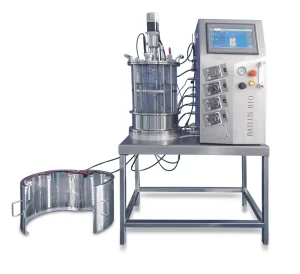
Businesses involved in biofuel, pharmaceuticals, and food are now upgrading to advanced algae bioreactor systems to maximise production and avoid contamination. According to ferm-bio’s photobioreactor solutions, modern photobioreactor designs can deliver both efficiency and flexibility for research and large-scale production.
This blog discusses the five benefits of using a photobioreactor for algae cultivation and how these systems can boost productivity and ROI in increasingly competitive markets.
What is a Photobioreactor for Algae Cultivation?
A photobioreactor for algae cultivation is a closed system designed to optimize the growth of microalgae by controlling light, nutrients, temperature, and gas exchange. A photobioreactor guarantees sterility, reproducibility, and scalability, unlike open ponds, which leave cultures vulnerable to contamination and unpredictable weather. This makes it favourable for those companies that require consistent biomass and oil yields for biofuels, pharmaceuticals, cosmetics, and nutraceuticals.
Types of Photobioreactors
Businesses like ferm-bio and other vendors offer customizable solutions to meet research and industrial needs. Some of the most widely used systems include:
- Glass Photobioreactor – Ideal for laboratory and pilot scale research, this glass photobioreactor allows clear observation of the growth of algae while keeping a sterile environment.
- Algae Photobioreactor:is an engineered product for high-density algae bioreactor application for easy upscaling & maximum productivity.
- Tubular photobioreactor: is a photobioreactor that has been designed to ensure effective penetration of light and exchange of gases, usually used for the production of oil and biomass on commercial scales.
- Flat-panel photobioreactor: is compact and energy-efficient. They are suitable for the controlled environment where uniform light distribution is required.
Each design provides support for different stages of development: from R&D to commercial use at scale, thereby allowing businesses to pick the most cost-effective solution in the pipeline.
5 Key Benefits of Using a Photobioreactor for Algae Cultivation
Investing in a photobioreactor for algae cultivation is more than a modern technology. It is an effort to increase efficiency, reduce risk, and scale up production for valuable market players. Here, we break down five main benefits of a photo bioreactor that make it better than a traditional open pond.
Benefit 1: Higher Biomass Productivity and Controlled Growth
One of the most important benefits of using a photobioreactor for algae cultivation is the very high biomass yields. In an open pond, the growth of algae involves multiple environmental factors that are quite unpredictable due to variations in light, contamination, and seasonal changes. In contrast, a photo bioreactor can control light, temperature, nutrients, and gas at a given point, providing optimal growth throughout the year.
In businesses, this can be counted as a steady supply and consistent output. Industry studies indicate that the productivity of a well-designed algae bioreactor can be five times greater than that of open ponds. This means better ROI, faster time-to-market, and a stronger competitive advantage.
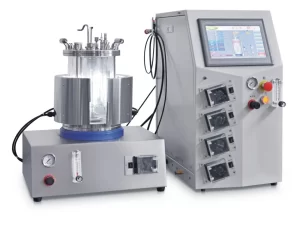
Options like ferm-bio’s glass photobioreactor and algae photobioreactor are designed for small-scale research and large-scale commercial applications. With their even light distribution and automatic nutrient delivery, these systems make it easier for organisations to achieve predictable, high-density cultures free of variations observed with conventional systems.
The outcome: dependable growth, increased biomass concentration, and a quicker route to scaling your algae-based products.
Benefit 2: Improved Sterility and Contamination Control
Contamination is one of the most expensive and disruptive risks that algae-based product companies face. Open ponds are highly susceptible to harmful microorganisms, parasites, and other contaminants in the environment, which can easily wipe out a complete culture overnight. In contrast, a photobioreactor used for algae cultivation operates in a closed, controlled environment that drastically reduces these risks.
A photobioreactor is intended to keep sterile conditions using sealed vessels, air exchange filters, and is capable of automatic cleaning. This allows only the right algal strain to grow in the reactor, preventing expensive culture crashes and protecting product quality. For industries engaged in high-value fields like pharmaceuticals, cosmetics, and nutraceuticals, sterility is a must.
Ferm-bio’s algae photobioreactor and glass photobioreactor feature upgraded sealing and sterilizing functions ideal for labs and commercial establishments that need to comply with regulations and constant purity. By implementing automated monitoring, businesses are able to observe and address any contamination threat that occurs in real time, ensuring continuous output.
In short, contamination is costly. By choosing to invest in a modern algae bioreactor, you can protect both your culture and your wallet.
Benefit 3: Optimized Light Delivery and Photosynthetic Efficiency
Light is the lifeblood of microalgae growth. In open ponds, light does not penetrate through the water uniformly. Often, algae on the surface prevents sunlight from getting to deeper layers. This limits growth efficiency and reduces overall yields. A photobioreactor for algae cultivation, in contrast, optimizes photosynthesis through uniform and controlled distribution of light.
Modern photo bioreactor systems use carefully designed geometries, such as tubular or flat-panel structures, to ensure that each algal cell receives an optimal light–dark cycle. This equilibrium encourages photosynthesis, while avoiding photoinhibition, which happens when cells absorb excessive light. The outcome is quick growth and enhanced energy transfer efficiency.
For instance, ferm-bio has glass photobioreactors as well as algae photobioreactors that spread the light evenly throughout the culture medium. As a result, they are highly effective for research and production. The clear material, modular structures, and adjustable nature of their products allow companies to modify light intensities, wavelengths, and even install artificial LED lights for indoor facilities.
For companies, this means improved productivity, more consistency, and the possibility of scaling in environments with no natural sunlight. An algae bioreactor that works well converts light into biomass and valuable oils for maximum return on the investment.
Benefit 4: Enhanced Lipid and Oil Accumulation — How Photobioreactors Produce Usable Oil
One of the most exciting benefits of using a photobioreactor for algae cultivation is enhanced lipid (oil) production. Algal oils are building blocks for biofuels, nutraceuticals, and specialty cosmetics. However, generating these oils in open ponds on a consistent basis is nearly impossible due to uncontrollable environmental stress.
A photobioreactor enables companies to impose distinct stress conditions, like nitrogen limitation, salinity alteration, or temperature fluctuations, that prompt microalgae to enhance lipid accumulation. The two-step cultivation process (growth → stress induction) has been shown in studies to increase yields significantly while maintaining culture stability.
In practical terms, businesses are able to grow algae under conditions that are nutrient-rich until a high-density biomass is reached. They will then change to stress conditions inside the algae bioreactor to stimulate lipid accumulation. The outcome is a reliable and consistent process to make usable oil at scale.
Ferm-bio’s algae photobioreactor systems feature modular controls that allow the operator to control the CO₂, nutrient feeds, and temperature for maximum oil productivity. Thanks to these features, high lipid content can be produced consistently, which is important for biodiesel or omega-3 supplements.
By benefiting from these air and water control conditions, companies are able to maximize oil yield and also standardize quality in every batch. This predictability is very beneficial for businesses looking to mass-produce and increase market demand.
Benefit 5: Scalability, Automation, and Process Reproducibility
For any business contemplating algae as a commercial opportunity, scalability is the final hurdle. Though an open pond is okay for experiments, only a photobioreactor for algae cultivation provides full automation and reproducibility needed for industrial-scale production and long-term success.
Ferm-bio’s systems for modern photo bioreactors exhibit modular design to scale up from small laboratory setups to full-blown industrial facilities. This modularity helps organizations to gear up production without compromising quality or performance.
Automation is another critical advantage. The advanced systems of algae bioreactors come with built-in sensors and controllers. These sensors help to measure factors like pH, dissolved oxygen, temperature, and nutrient concentrations continuously. This ensures that every production cycle is stable and there is no need for manual intervention, leading to reduced labor costs and increased reliability.
Most importantly, reproducibility ensures businesses provide the same product to customers and fulfil industry requirements. Whether your focus is on biofuel, pharmaceuticals, or functional food ingredients, reproducibility builds trust in your partners and customers.
With a modern photobioreactor for algae cultivation, companies can improve production scalability, reduce human error, and confidently deliver to high-demand markets with reliable supply chains.
Design Principles of Photobioreactors for Algae Cultivation
A well-designed photobioreactor for algae cultivation makes the difference between average performance and consistent high-yield operations. The growth environment can be completely controlled in a photo bioreactor, unlike in open ponds, but it needs smart engineering. The key design principles can be summarized in four areas.
- Light Distribution: Due to the fact that microalgae need light for photosynthesis, the system must provide uniform light to every cell. Flat-panel and tubular designs optimize light penetration, preventing the presence of “dark zones” where algae growth halts.
- Mixing and Circulation – Proper mixing keeps the nutrients properly spread out, while the cells won’t clump together. At the same time, the system should ensure that excessive shear stress will not damage delicate algal strains.
- Gas Exchange: An efficient algae bioreactor continuously delivers CO₂ that supports growth while efficiently removing too much oxygen that can impede production. This balance directly impacts biomass and oil yields.
- Materials and maintenance: Materials and maintenance must be transparent, durable, and resistant to fouling for long-lasting use. Effortless cleaning and disinfection further minimize downtime and contamination risks.
Products like ferm-bio’ s algae photobioreactor show high reliability and scalability for research and commercial applications as per the design guidelines. By keeping these fundamentals in mind, businesses can expect predictable yields and enhanced efficiency within any algae bioreactor design.
Practical Section — Choosing the Right Photobioreactor for Algae Cultivation
Different companies need different types of photobioreactors for algae cultivation. Choosing the right solution depends on your goals, volume, and budget. A photo bioreactor is not a quick purchase; that’s why its specification must match with your application to ensure efficiency and profitability.
Here are key considerations when choosing a PBR
- Research and Development: For labs and universities, a Glass Photobioreactor provides excellent visibility, sterility, and control for small-batch testing.
- Pilot Scale: Companies exploring commercialization can use modular Algae Photobioreactors that bridge the gap between laboratory experiment and production capabilities.
- Industrial Scale: Tubular or flat-panel systems are best for generating large amounts of biomass or oil. These high-capacity systems provide the scalability required for biofuels and nutraceuticals.
- Automated Needs: Businesses that want consistency should choose algae bioreactors with integrated monitoring (pH, temperature, CO₂, light intensity) for reproducibility purposes.
- ROI and upkeep expenses – weigh upfront cost against savings. Using long-lasting materials, easy cleaning, and sterile reliability increases uptime and ROI.
Using ferm-bio’s photobioreactors, companies can select systems that suit their individual growth stages and transition from lab-scale discovery to industrial-scale production.
Methods — Harvesting and Oil Extraction Compatible with PBR-Grown Biomass
When algae reach the optimum density in a photobioreactor for algae cultivation, the next hurdle is converting the biomass into valuable products. A photo bioreactor produces cleaner and denser cultures than open ponds, which makes harvesting and oil extraction easier.
Harvesting methods commonly used with PBR systems include:
- Centrifugation: it’s a rapid and effective method for algae separation from the medium on a commercial scale.
- Flocculation: it involves the use of safe agents that clump cells together to reduce the energy requirement for dewatering.
- Membrane Filtration: Perfect for smaller systems with greater precision and sterility.
Oil extraction methods suitable for PBR-grown biomass include:
- Solvent extraction (hexane or ethanol): commonly used, cost effective and scalable.
- Supercritical CO₂ Extraction: A method that produces high-quality oils for nutraceuticals and cosmetics.
- Mechanical disruption of the cell by bead milling and homogenization prepares biomass for efficient extraction.
Ferm-bio’s algae photobioreactor allows companies to create reliable high-density cultures, simplifying the downstream process. Firms can integrate their harvesting and extraction methods with a state-of-the-art algae bioreactor to create a streamlined production pipeline for all oil-based products, from cultivation to biodiesel and omega-3s.
Cost, ROI Considerations, and Real-World Examples of Photobioreactors for Algae Cultivation
Investing in a photobioreactor for algae cultivation is a smart move. While the initial costs of a photobioreactor are usually higher than open ponds, the enhancement in yields, sterility, and scalability of a photobioreactor usually delivers a more robust long-term ROI. Businesses, therefore, enjoy more reliable supplies, less contamination damage, and more valuable biomass.
Here’s a simplified cost and performance comparison.
| System Type | Capital Cost | Footprint (m²) | Yield (g/m²/day) | Est. Cost/kg Biomass |
| Open Pond | Low | Large | 10–25 | $5–7 |
| Algae Photobioreactor | Medium-High | Compact | 50–80 | $2–4 |
| Glass Photobioreactor | Medium | Small (lab use) | 40–60 | N/A (R&D scale) |
Case Studies:
- A pilot plant for biofuels in Europe reported algae yields in tubular bioreactors 4–5x as high as their yields in ponds.
- In China, the flat-panel PBR systems showed stable production of omega-3 oil for nutraceutical markets.
- According to various universities, ferm-bio’s photobioreactors are most effective for scaling from lab trials to industrial applications.
These examples demonstrate that modern photo bioreactors can provide significant commercial value for companies, helping many businesses become more efficient and profitable.
Conclusion
The benefits of adopting a photobioreactor for algae cultivation are many. They include higher productivity, sterility, predictable oil yields, and scalable layouts that promise long-term ROI. For companies focused on biofuels, nutraceuticals, cosmetics, or research, moving from open ponds to a modern photo bioreactor isn’t a luxury; it’s a competitive necessity.
Through its well-known ferm-bio photobioreactor solutions,ferm-bio technology presents advanced algae bioreactor systems suitable for labs, pilot plants, as well as full-scale industries. Investing in our solutions allows you to achieve consistent growth, operational reliability for oil extraction, and faster time-to-market for your products.
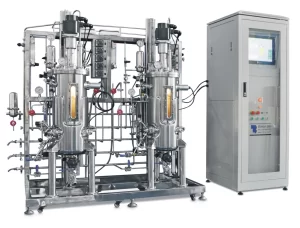
Are you ready to boost algae yields? Contact ferm-bio today and discover how their innovative photobioreactors can transform your business.