The question of “how does a bioreactor work” is more common nowadays than ever before in modern biotechnology. The bioreactor definition is straightforward: it is a container that creates an environment for the growth of cells, microbes, or tissues. However, behind such simplicity lies advanced engineering, mixing, aeration, sensors, and automation.

Are you setting up a fermenter laboratory, researching the types of bioreactors, or thinking about a disposable bioreactor? The objective remains the same: scalable and consistent production. At Ferbio, we offer cutting-edge fermentation tools and systems that assist companies, from pharmaceuticals to food technology, in selecting the correct medium of action, even with a fermenting starter kit, that helps users understand how bioreactors work at the early stages of research.
In this guide, we’ll discuss how bioreactors work, their main components, and the importance of bioreactors in innovation and development of the modern bio-driven economy.
Types of Bioreactors & Modes of Operation
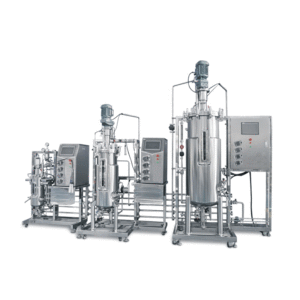
To understand how does a bioreactor works, it’s important to look at the types of bioreactors in the market today. The designs serve different purposes, ranging from research at a fermenter laboratory to large-scale industrial production. where knowing how helps bioreactors work ensure scalability and reproducibility.
- Stirred-Tank Bioreactors – The most widespread design, which has an agitator to provide adequate mixing and oxygen transfer. Widely applied in the pharmaceutical and food industries.
- Airlift Bioreactors- these make use of air bubbles to mix and circulate, resulting in less shear stress on delicate cells.
- Packed Bed and Fluidized Bed Bioreactors – These are commonly used in the treatment of wastewater and in the production of enzymes.
- Disposable Bioreactor Systems – Also referred to as single-use bioreactors, they are gaining popularity due to reduced cleaning needs and lower risk of contamination. Many businesses now favor them for project turnover.
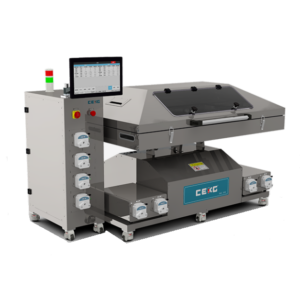
Bioreactors can also vary in their mode of operation :
- Batch: All nutrients are added initially; suitable for basic and small production.
- Fed-Batch: Nutrients are added gradually, allowing for greater productivity.
- Continuous / Perfusion: Fresh media is constantly supplied, enabling continuous production, ideal for long-run biologics production.
Industry leaders such as Ferbio emphasize that choosing the right system depends on balancing scale, sterility, and efficiency. The combination of mode and design is the key to success, and determines how bioreactor work in both small and large-scale processes.
Core Components of a Bioreactor
To really see how does a bioreactor work, we must examine its key components. A bioreactor is not merely a vessel; it is a carefully designed environment where biology and technology interact. Below are the most important considerations that any business must make when choosing a system:
- Vessel (Reactor Body):This is the main chamber of the reactions. Disposable bioreactor designs can be made of stainless steel, glass, and modern plastics. Ferbio is a company that offers customized vessels to meet the expectations of both industrial and laboratory fermenter applications.
- Agitation / Mixing System: This is necessary to mix the cells, nutrients, and gases. The selection of the appropriate impeller or stirrer will eliminate dead zones and help achieve high yields.
- Aeration System: Delivers the oxygen (or eliminates gases) that are essential in cell growth. This may be in the form of spargers, membranes, or airlift mechanisms, depending on the types of bioreactors.
- Temperature Control: Biological reactions only perform well at specific temperatures. Jacketed vessels, cooling coils, or external heat exchangers are used to maintain processes at a constant temperature.
- pH and Nutrient Control: Sensors measure and regulate acidity, alkalinity, and nutrient feeds, which are necessary for the growth of optimum cells.
- pH and Nutrient Control: The sensors control the level of acidity, alkalinity, and nutrient feeds, which are required to grow optimum cells.
- Monitoring and Control Systems: Advanced Bio reactors encompass automation, real-time analytics, and digital tools. This is where fermentation tools, such as probes and sensors, ensure accuracy throughout the process.
These components minimize risks such as contamination and maximize productivity— the foundation of how bioreactor work successfully in any environment.
How Does a Bioreactor Work: Process Flow / Functional Steps
We can comprehend how does a bioreactor work more clearly when we walk through the process itself. Regardless of the type of product, pharmaceutical, food, or research, all bioreactors have a defined series of steps, each influencing how bioreactor work to maintain productivity:
- Inoculation / Seeding: The process starts with inoculation, which is the introduction of cells or microorganisms into the bioreactor. This process begins when the culturing is done on a larger scale. For this, a fermenting starter kit is used in a laboratory fermenter.
- Media Preparation and Addition: Media of high nutrient content are prepared, which have sugars, amino acids, and minerals. These nutrients support growth and product formation.
- The cellular reaction/growth stage: The cells multiply and break down the nutrients of the vessel. The fermentation tools are well advanced to ensure that mixing, aeration, temperature, and pH are closely monitored. This is the stage where the core biological reactions occur.
- Gas Exchange and Waste Removal: Oxygen enters the body while carbon dioxide and other metabolic wastes leave it. The efficiency of this step is directly related to the aeration system, whether it’s a stirred tank process or a disposable bioreactor system.
- Product Formation: Depending on the application, the bioreactor produces proteins, enzymes, biomass, and other useful molecules. In food production, this may involve brewing, rearing meat, or producing flavor compounds.
- Harvesting and Downstream Processing: Once the desired product reaches the right concentration, it is extracted and purified. This phase is crucial in industries with a high level of quality and compliance, such as the biopharma industry.
In short, how does a bioreactor work is about maintaining precise control over each of these steps. Ferbio is a great example of how smart design and automation at each step help achieve maximum yield while minimizing risks of contamination or quality equivalent.
Key Performance Parameters & Constraints
An explanation of how does a bioreactor work must not only cover its basic components but also look into the factors that affect performance directly. These parameters determine the efficiency, yield, and reliability; hence, they are key to fermenter laboratory research and to full-scale production.
1. Oxygen Transfer Rate (OTR)
Aerobic cells need oxygen to grow, and the speed of their dissolution in the culture medium has a direct impact on the productivity. When there is an insufficient supply of oxygen, growth is decelerated; when excessive, foaming or oxidative stress can occur. The modern types of bioreactors have optimized aeration systems to ensure a constant supply of oxygen.
2. Shear Stress
Mixing by mechanical agitation and gas sparging can physically harm fragile mammalian or stem cells. The control of shear force is particularly important in biologics production, where cell viability dictates productivity. Designs such as airlift or disposable bioreactor systems tend to decrease the stress while keeping the efficiency.
3. Mass Transfer & Mixing Efficiency
Homogenous mixing ensures the uniform distribution of nutrients, oxygen, and pH throughout the culture. Lack of mixing results in gradients, which restrict growth and lead to erratic results. Sophisticated fermentation tools now help businesses monitor and optimize this balance.
4. Heat Transfer
Biological reactions produce heat, and uncontrolled temperature may inhibit the activity of enzymes or destroy cells. Coils, jacketed vessels, or other external heat exchangers are used for ambient control of the environment. Scaling up from a fermenting starter kit to industrial volumes requires careful heat management.
5. Contamination Risk
Contamination can contaminate entire production processes, that wastes money and compliance breaches. More scientists are turning towards using disposable bioreactor technologies due to less need for cleaning and lower contamination risk. Ferbio suppliers agree that Sterility is still one of the key requirements of quality production.
6. Scale-Up Challenges
Scaling Lab Models to Commercial Systems is not a Linear Process. Oxygen transfer and mixing parameters vary significantly with volume size. This implies that it is imperative to have pilot-scale validation in order to prevent costly surprises. Manufacturer-specific solutions ensure that the process of how does a bioreactor work is similar at other levels.
These parameters are necessary in understanding how does a bioreactor work in practice. With the right balance of design, monitoring, and fermentation tools, businesses can achieve consistent results and reliable performance.
Recent Advances and Innovations in Bioreactor Technology
The understanding of how does a bioreactor work in industry is constantly evolving through innovation. New technologies not only enhance performance but also reshape how bioreactor work in sustainable and automated systems:
- Single-Use / Disposable Bioreactor Systems: The Disposable bioreactor technology is transforming manufacturing by reducing the cleaning verification, risk of contamination, and downtime. Such systems are particularly attractive to multiproduct facilities in which flexibility and speed of turnaround are critical.
- Perfusion and High-Density Cultures: Perfusion delivers a constant supply of fresh media while removing waste, unlike traditional batch systems, enabling high-density cell growth. It has a greater productivity and is a common method in biologics manufacturing, making it a significant breakthrough in the types of bioreactor technology.
- Hollow-Fiber and Membrane Bioreactors: These systems involve the use of membranes in mass transfer, allowing nutrients to enter and wastes to exit. They are especially valuable in tissue engineering and regenerative medicine, where delicate cells require gentler conditions.
- Automation and Digital Control: Modern systems provide integrated high-quality sensors, AI, and machine learning to monitor the conditions of the growth in real time. Operators can now predict trends and optimize their feed strategies, and improve success with advanced fermentation tools.
- Sustainability and Energy Efficiency: Companies are under pressure to reduce energy consumption and the impact on the environment. Innovations such as energy-efficient mixing systems, reusable materials, and smarter heating are reshaping how does a bioreactor work sustainably.
- Niche Applications Customization: Cultured meat startups and industrial enzyme manufacturers usually require specially tailored solutions. Suppliers such as Ferbio support this by crafting vessel size, geometry, and accessories to suit a fermenter laboratory or a full-scale commercial line.
These innovations not only enhance productivity but also create new markets. In business, staying ahead of these trends will guarantee competitiveness in a sector where inefficiency is not an option.
Applications and Case Studies of Bioreactors
When companies pose the question “how does a bioreactor work?” the answer is most convincing when presented in real-world applications. Global health, food, and sustainability are all heavily influenced by bioreactors across industries.
1. Pharmaceuticals and Biopharma
Biologics such as monoclonal antibodies, vaccines, and recombinant proteins all rely on bioreactors. For example, large disposable bioreactor systems help companies minimize contamination risks while saving time with reduced downtime and faster time to market.
2. Tissue Engineering and Regenerative Medicine
Bioreactors are also applicable in the medical field, where stem cells, tissues, and even organs are grown in a strictly controlled environment. Hollow fiber systems support sensitive cells by reducing shear stress- demonstrating high-level types of bioreactors in practice.
3. Food and Beverage Industry
The food industry is dependent on bioreactors to brew beer and ferment meat. The process may start with a lab fermenting starter kit, but to scale up, industrial systems such as those provided by Ferbio are needed, as they provide compliance and reproducibility.
4. Environmental and Energy Applications
Bioreactors are also used in wastewater treatment, biofuel production, and carbon capture. In this case, well-built designs and specific fermentation tools allow processing of large volumes with little operational interruptions.
5. Case Study: Ferbio Solutions
Recently, a global food producer purchased a customized fermenter laboratory solution from Ferbio. The combination of automation and monitoring allowed them to decrease variability between batches by 25% and increase yield, which proves the quantifiable importance of a highly developed system design.
These applications highlight why it’s essential to understand how does a bioreactor work—not only for scientists but also for decision-makers focused on efficiency, scalability, and ROI.
Design Considerations When Choosing a Bioreactor
When companies consider how does a bioreactor works in their operations, selecting the right system is a critical task. These factors influence how bioreactor work long-term in industrial and laboratory settings:
- Match Bioreceptor Type to Organism: Organisms can grow under various conditions. Stir-tank bioreactors are compatible with microbes, whereas airlift or hollow-fiber types of bioreactors are frequently required when mammalian or stem cells are involved.
- Scale and Production Goals: Large vessels aren’t needed for a fermenter laboratory; a fermenting starter kit is sufficient for pilot studies. In the case of industrial production, bigger vessels with intensive monitoring and automation are required.
- Sterility and Contamination Control: Sterility cannot be compromised. Companies are now investing in disposable bioreactor systems to reduce cleaning expenses, lower the risk of contamination, and also to achieve regulatory standards.
- Regulatory Compliance: GMP (Good Manufacturing Practice) regulations govern system design and validation in pharmaceuticals. Bioreactors must integrate reliable fermentation tools to meet these quality requirements.
- Cost and Flexibility: Stainless steel systems are still the standard for large-volume production, but single-use systems give some flexibility to facilities that process multiple products. Ferbio designs custom systems to meet your budget and scale.
- Automation and Data Integration: The real-time monitoring and process control are becoming increasingly relevant for scaling operations. Digitized bioreactors provide predictive insights, optimizing yield and reducing downtime.
Once executives and engineers consider these factors, they ensure that their investment meets current requirements while preparing for future growth. After all, to make better and profitable decisions, it is first necessary to understand how does a bioreactor work.
Challenges and Future Directions
Despite being the most advanced technology, there are still challenges that affect how does a bioreactor work at scale. Companies that want to invest in bioreactor systems should be aware of these challenges while also watching out for future opportunities.
- Scaling Up Without Losing Performance: Processes that seem to work in a fermenter laboratory do not necessarily work directly on the manufacturing line. Parameters such as oxygen transfer and mixing efficiency behave differently at larger volumes, and this generates inconsistencies in yield.
- Contamination Control: Contamination is also one of the largest threats, particularly in multi-product plants. Although the disposable bioreactor systems assist in mitigating this risk, businesses need to exercise sharp quality control and invest in strong fermentation tools.
- High Operating Costs: The cost is increased by energy consumption, cleaning needs, and downtime. Companies seek solutions that reduce these costs without compromising performance.
- Regulatory Complexity: It’s hard to navigate GMP and other compliance frameworks. As bioreactor applications continue to spread into food, pharma, and sustainability, regulation will take hold.
Future Directions
- AI and Machine Learning will change how a bioreactor functions, allowing for real-time prediction and optimization.
- Sustainable innovations such as recycled materials, energy-efficient technologies, and designs will become the norm.
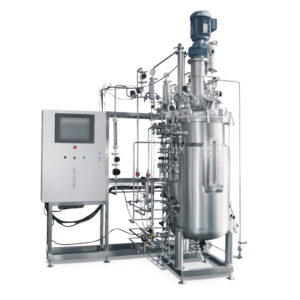
- Customization will grow, as businesses like Ferbio now offer tailored systems for everything from starter-kit research to full-scale production.
The future of bioreactors lies in smarter, flexible, and more sustainable bioreactor designs. Companies that embrace these trends will be in a better place to scale innovations rapidly and competitively.
Conclusion
Understanding how does a bioreactor work is vital for any business planning to expand in the fields of pharmaceuticals, food tech, or environmental solutions. From vessel design to advanced fermentation tools, every element impacts efficiency, safety, and compliance. The industry has become more flexible than ever, with new inventions such as disposable bioreactor systems and customizable solutions for both industrial production and fermenter laboratory setups. The real question is not whether to adopt bioreactor technology, but which partner to trust.
Ferbio offers world-class quality vacuum fermenters for the agro-industrial and pharmaceutical sectors. Whatever you need — a fermenting starter kit or a high-capacity bioreactor — will keep your business competitive, compliant, and future-proof.
Are you ready to take your operations to the next level? Shop from Ferbio for your bioreactor products and get smarter, scalable solutions.