In the era of synthetic biology, what are the directions for Fermentation optimization?
This question has become a core focus for both academic researchers and industrial practitioners, as the entire biomanufacturing chain hinges on refining fermentation efficiency and scalability.
The rapid development of genetic engineering, metabolic engineering, and synthetic biology technologies has provided unprecedented opportunities for Fermentation optimization, breaking through long-standing bottlenecks in traditional fermentation processes.
Expressing exogenous proteins through the insertion of exogenous genes, constructing novel exogenous pathways for expressing heterologous products, and expressing mRNA vaccines have significantly expanded the scope of research in fermentation processes. However, because the introduction of exogenous genes can alter the metabolic characteristics of host cells, strains expressing different products on the same host and strains constructed using different strategies exhibit varying performance during fermentation, adding layers of complexity to targeted Fermentation optimization.
While these new technologies bring opportunities to the traditional fermentation industry, they also present numerous challenges that directly hinder the progress of Fermentation optimization in real-world production.
In the past decade, the development of synthetic biology has driven significant advancements in strain construction and high-throughput automated screening technologies, enabling the faster acquisition of high-performance strains. Even so, without matching Fermentation optimization strategies, these elite strains fail to realize their full potential in industrial settings.
However, the traditional fermentation process development based on laboratory-scale reactors requires substantial manpower and is time-consuming and labor-intensive, clearly unable to meet the demands of performance verification and process development for such a large number of strains. The subsequent development of microfluidic technology has made progress in solving high-throughput, automated culture problems, playing a crucial role, especially in the high-throughput screening of high-performance strains, laying a foundation for more efficient Fermentation optimization.
However, the flow field environment within microchannel reactors differs significantly from industrial environments. While this increases screening throughput, it still presents limitations for scale-up fermentation processes. Therefore, developing high-throughput, automated micro parallel reactors, especially those accurately reflecting industrial production environments, has become a novel challenge for Fermentation optimization equipment in the current development of synthetic biology.
Furthermore, fermentation is a complex and dynamic process requiring extensive online parameter monitoring. Thus, high-throughput fermentation process optimization equipment also presents challenges in storing, visualizing, and analyzing massive amounts of process data—obstacles that must be overcome to elevate Fermentation optimization to a more precise and intelligent level.
Data science needs to be introduced into fermentation process optimization research. Data science theories and tools can be used to process the massive amounts of data generated during high-throughput process development. Technologies related to high-throughput screening data analysis can be referenced in this regard.
Existing data science software includes Python-based packages such as scikit-learn, pandas, and Numpy, as well as the open-source KNIME software package.
On the other hand, metabolic engineering and synthetic biology, in constructing high-performance bacterial strains, integrate a series of exogenous genes into the chassis host bacteria or modify the host bacteria’s own genes to form a large number of strains.
Understanding the physiological and metabolic characteristics of wild-type host microorganisms in fermenters, such as optimal pH, temperature, growth rate, nutrient requirements, and metabolic responses under excess substrate and oxygen limitation, is crucial for selecting high-throughput screening models and requires detailed study.
Furthermore, the unique metabolic characteristics exhibited by numerous strains derived from different host microorganisms or modification strategies in the reactor are of significant reference value for better strain modification.
While researchers can refer to numerous genomic, transcriptomic, and proteomic databases during strain modification, databases on the metabolic characteristics of microorganisms during fermentation are severely lacking.
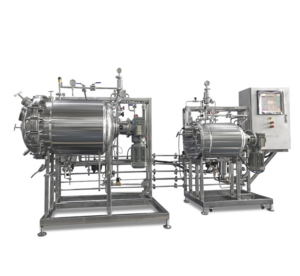
This presents a new challenge: constructing a database of the metabolic characteristics exhibited by different host microorganisms, as well as strains derived from the same host microorganism with different modification targets or strategies, in bioreactors. Such research has not yet been reported.
This relies on both high-throughput fermentation equipment and efficient data science processing tools. With advancements in both areas, such databases will provide richer data support for subsequent strain modification.
Furthermore, a current deficiency in strain construction is the need to consider problems encountered during fermentation scale-up before constructing strains and selecting expression systems. For example, issues such as uneven substrate concentration distribution, limitations on maximum oxygen transfer capacity, the cost of large-scale inducer use, and the negative impact of excessively high dissolved CO2 concentrations on cell viability in large-tonnage fermenters should all be considered during strain construction and high-throughput screening.
However, researchers engaged in upstream biotechnology development, such as strain modification, often lack awareness or sufficient attention to this aspect. Strains constructed based on this lack of understanding can become unavoidable bottlenecks for subsequent fermentation process optimization. Therefore, strengthening communication between strain construction researchers and fermentation engineering researchers is crucial to push forward holistic and effective Fermentation optimization.
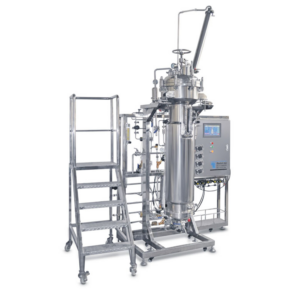
About Ferbio: Ferbio possesses extensive experience in manufacturing various reactors and pressure vessels. We have a team of experts in bioreactors, fermentation processes, mechanical manufacturing, and automation control. Our research and technological capabilities are consistently at the forefront domestically and among the best internationally, providing you with a comfortable, reliable, and worry-free product experience.