Microbial bioreactors, animal cell bioreactors, and plant cell bioreactors are different in these main ways:
Microbial Cells
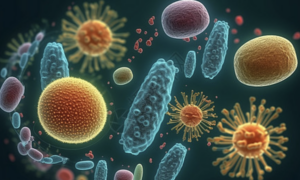
Microbial cells are small. Bacteria are usually 1–5 μm. Fungi are a little bigger. Some have cell walls. Some have no cell structure (like viruses). They can live in many harsh places. They are good at adapting to the environment.
This is why microbial Cell Bioreactors are very stable.
Animal Cells
Animal cells have no cell walls. Their diameter is usually 10–100 μm. They are weak. They are easily hurt by shear force. Mechanical power can damage them.
Special care is needed for animal Cell Bioreactors.
Plant Cells
Plant cells have cell walls. They are bigger than microbial cells. Their size is usually 10–200 μm. They can stand shear force better than animal cells. They can stand shear force worse than microbial cells.
Plant Cell Bioreactors need moderate shear protection
Nutrient Requirements
Microbial Cells
Microbial cells do not need many kinds of nutrients. They can use many carbon sources and nitrogen sources. They can grow in simple media. For example, Escherichia coli can grow in media with only glucose, inorganic salts, and nitrogen sources.
Animal Cells
Animal cells need many kinds of nutrients. They need basic things like amino acids, vitamins, and glucose. They also need complex things like serum. Serum provides growth factors and other needed substances.
Plant Cells
Plant cells need fewer nutrients than animal cells. They usually need inorganic salts. They need sucrose (as a carbon source). They need plant growth hormones. They do not need serum.
Bioreactor Design Features
Microbial Bioreactors
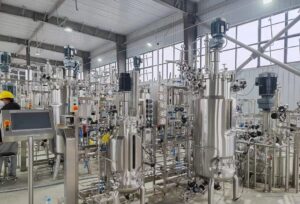
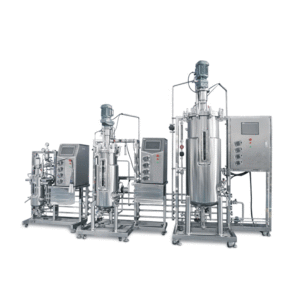
They can work in many situations. They can blow air well. They can stir well. Microbes grow fast. They need much oxygen. They need nutrients to mix well. So the design meets these needs. For example, standard fermenters are tall (compared to their width). They have strong stirring systems. They have strong aeration devices.
Animal Cell Bioreactors
The main thing is to reduce shear force. This stops cells from being damaged. They often use special stirring tools (like marine impellers). They blow air in gentle ways. For example, they use diffusion or permeation.
Plant Cell Bioreactors
They need to let oxygen get in well. They also need good fluidity. They need low shear force. People use modified stirred bioreactors. Or they use non-stirred reactors like bubble columns and airlift bioreactors.
Culture Process Control
Microbial Cells
They grow and multiply fast. Their doubling time is 0.5–2 hours. During fermentation, people need to control some things. These things are temperature, pH, dissolved oxygen, and nutrient concentration. They must stop other bacteria from getting in.
Animal Cells
They grow slowly. Their doubling time is 12–60 hours. People need to control environmental conditions strictly. These conditions are temperature, pH, dissolved oxygen, and osmotic pressure. They also need to stop cells from dying or changing.
Plant Cells
They grow slower than microbes. They grow a little faster than animal cells. Their doubling time is 24–72 hours. People need to control temperature, pH, and dissolved oxygen. They also need to pay attention to light. They need to add plant hormones.
Application Fields
Microbial Bioreactors
People use them a lot in the fermentation industry. They make antibiotics, amino acids, enzymes, alcohol, beer, and other things. They also use them for wastewater treatment. They use them for bioenergy production.
Animal Cell Bioreactors
People mainly use them to make biological products. These products are vaccines, monoclonal antibodies, and recombinant protein drugs. They also use them for research. The research is about cell therapy and tissue engineering.
Plant Cell Bioreactors
People use them to make plant secondary metabolites. These metabolites are saponins, flavors, alkaloids, and pharmaceutical proteins. They also use them for research. The research is about plant cell genetic transformation and crop improvement.
About Ferbio
Ferbio has rich experience in manufacturing various bioreactors and pressure vessels. With an expert team integrating biological reaction, fermentation technology, mechanical manufacturing, and automation control, our R&D and technological capabilities maintain a leading position in China and reach world-class standards, providing you with comfortable, reliable, and reassuring product experiences.