In the early morning in Bozhou, Anhui, the traditional Chinese medicine market is busy. Farmers push carts full of herbs through the streets, and buyers carefully pick high-quality raw materials. This “Capital of Chinese Medicine” has a thousand-year history of traditional Chinese medicine. It is now seeing big changes in traditional Chinese medicine fermentation. These changes give new life to these ancient herbs and build a trillion-yuan industry.

Exploring Medicine Fermentation Techniques
Traditional Chinese medicine fermentation is not new. Ancient people used earthenware jars to ferment herbs. It was a simple way that holds traditional wisdom. But traditional fermentation has many problems, like hard-to-control temperature and humidity, so product quality is not the same every time. Modern technology has greatly changed traditional Chinese medicine fermentation. In laboratories in Zhejiang, researchers use AI intelligent monitoring systems. They watch temperature, humidity and microbial changes all the time. The systems adjust automatically if something is wrong. This has greatly improved the efficacy and safety of fermented traditional Chinese medicine.
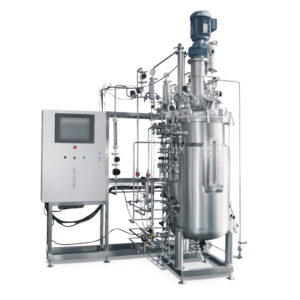
Now, there are three core models of traditional Chinese medicine fermentation. Each has its own features. Solid-state fermentation uses Chinese medicinal herbs as a “culture medium.” It grows microorganisms in a solid environment. It is cheap and simple, but industrial production is easy to have batch-to-batch instability. It is just like each batch of handmade soy sauce has a slightly different taste. Liquid fermentation mixes herbal extracts with a culture medium. It does deep fermentation in a liquid environment. So active ingredients are fully released, and this greatly improves how well the body absorbs the ingredients. Two-way fermentation is the most unique. Microorganisms and Chinese medicinal herbs interact and form a “microbial-medicine symbiosis” system. For instance, the fermentation of *Penicillium cicadae* and licorice residue increases the dissolution rate of glycyrrhizin. It also produces new active ingredients, and this makes the value of fermented Chinese medicine even higher.
China’s Chinese medicine fermentation industry has clear regional characteristics. Enterprises show their strengths and work with each other. Bozhou in eastern Anhui Province is a technology center and industrial cluster for traditional Chinese medicine fermentation. Large pharmaceutical companies have strong financial resources and advanced equipment. They have developed high-quality products. Fermented Ganoderma lucidum spore powder is a good example. With ultra-fine grinding and precise fermentation processes, the active ingredients are released more fully. So this product became very popular in the market when it was first sold.

Jiaozuo, Henan Province in central China, is famous for growing medicinal herbs. Local enterprises use this resource advantage. They use modern technology to ferment traditional Chinese medicine. Jiaozuo’s specialty yam becomes a sweet fermented yam drink after fermentation. It keeps its spleen-strengthening and stomach-nourishing effects and improves absorption. This fermentation process turns a traditional ingredient into a high-value product. It is very popular with consumers.
Minxian County in western Gansu Province has plenty of angelica resources. Local enterprises focus on angelica fermentation research. They have worked with eastern regions to bring in advanced technology. They developed angelica fermented essence. This product retains the traditional medicinal effects of angelica. It also increases the content of active ingredients and how well the body absorbs it. Traditional Chinese medicine fermentation has helped Minxian angelica gain a firm position in the market.
The fermented Chinese medicine industry has a diverse competitive situation. Companies of all types can find their place in it. Large pharmaceutical companies have strong capabilities. They keep upgrading their fermentation technologies and products. They meet the demands of the high-end market. Their fermented Chinese medicine slices go through strict testing. So they are widely popular in hospitals, pharmacies and other professional channels. Traditional Chinese medicine fermentation gives a solid guarantee for product quality.
A professional biotechnology company has technology as its core strength. It has over 4,000 patented microbial strains. It is like a big “treasure trove” of microorganisms. According to the characteristics of different traditional Chinese medicines, they select the most suitable strains for fermentation. They develop products with unique effects. They also provide technical solutions to other companies. They bring innovation to this niche market through traditional Chinese medicine fermentation.
Innovative SMEs do not fall behind. They grow their market through differentiation strategies. One SME in Hangzhou has targeted young people. It develops functional skincare products like face masks using traditional Chinese medicine fermentation. It combines traditional Chinese medicine health preservation with modern skincare. This product exactly meets the needs of young consumers. It gets a lot of praise.
The future of traditional Chinese medicine fermentation is full of possibilities. Technological progress and market maturity will make this field bigger. In terms of technology, precise fermentation will be used more widely. Scientists are using metagenomics to study the interaction between medicinal materials and microorganisms. They achieve precise “one medicine, one microorganism” matches. So the effects of traditional Chinese medicine fermentation are more stable and efficient.
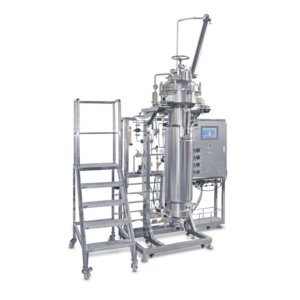
Also, intelligent manufacturing will become the mainstream trend in traditional Chinese medicine (TCM) fermentation. People use AI to monitor fermentation parameters. They also use blockchain for full-process traceability. This will improve production efficiency and ensure product quality. It will keep improving the industrialization level of TCM fermentation.
When people pay more attention to health, TCM fermentation will move towards personalized customization. Using gut microbiota testing results, customized fermentation programs will be made for individual consumers. So TCM fermentation is more in line with personal needs. It becomes a key option for health management.
Conclusion
Ferm-bio has extensive experience in manufacturing various types of reactors and pressure vessels. It has a team of experts in bioreaction, fermentation processes, mechanical manufacturing, and automation control. Its research and process capabilities are consistently at the leading level domestically and first-class internationally, providing you with a comfortable, reliable, and reassuring product experience.