
Selecting the appropriate bioreactor is not merely a technical choice; it’s a financial one. In 2025, organizations from biotech start-ups to large-scale pharmaceutical manufacturers are asking the same question: What’s behind the final bioreactor price?
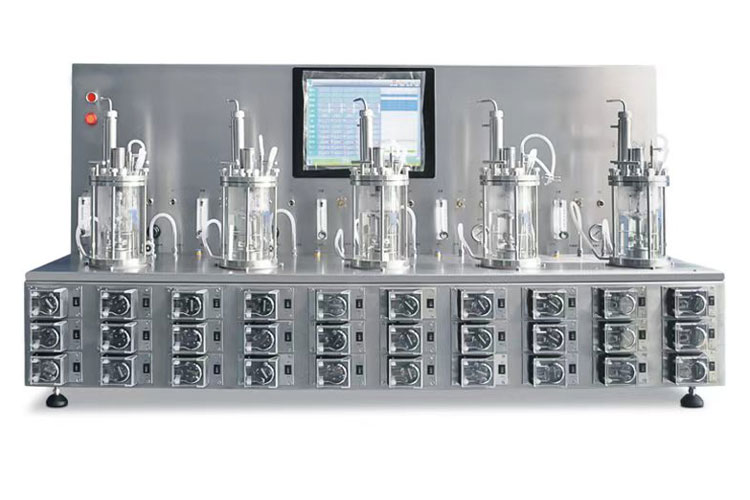
It’s true that prices can vary hugely, from an entry-level benchtop fermenter price of just a few thousand dollars, to a 1000L fermenter price of over a hundred thousand. Being aware of these price drivers will prevent you from ultimately overspending and ensure your purchases align with your R&D or production objectives.
In this article, we’ll cover 5 factors that affect fermenter price, compare fermenter types, including ferm-bio options, and discuss operational cost considerations so you can make smart strategic procurement decisions.
Bioreactor Definition & Types of Bioreactors
Before looking at costs, it helps to start with a clear fermenter definition. A bioreactor is a vessel where biological reactions are carried out in a controlled environment. It can vary from a microbial fermenter, mammalian cell culture, and wastewater treatment. The system selected has a direct impact on the performance and the fermenter price.
Key types in today’s market include:
- Glass Benchtop Bioreactors – are cost-effective, compact, and ideal for academic labs or proof-of-concept studies.
- Stainless steel systems are the industry standard for large-scale manufacturing, where a 1000L fermenter price can reach hundreds of thousands.
- Single-use fermenters are attaining significant traction in the biopharma world. They allow for flexible production and can be used due to lower cleaning costs.
- Membrane Bioreactors are widely used in the environmental sector, and the membrane fermenter price may vary based on size and compliance.

Suppliers like ferm-bio, for example, offer all these categories, starting from small research systems to full-scale stainless-steel fermenters. As such, they are a reliable partner for your lab, biotech startup, or an industrial manufacturer.
Quick Look: The Bioreactor Price Range in Today’s Market
Before we get into the five cost drivers, it’s useful to see where the fermenter price currently stands across different scales and applications. Prices differ based on volume, technology, and supplier—but having reference points helps buyers negotiate smarter.
A sample of market ranges is reflected below based on vendor listings, research reports, and leading suppliers ferm-bio, LabX, and Excedr.
| Bioreactor Type | Working Volume | Typical Price Range (USD) | Notes |
| Glass Benchtop Bioreactor Price | 1 – 10 L | $5,000 – $25,000 | Ideal for academic labs, teaching, and proof-of-concept |
| Stainless Steel R&D / Pilot | 20 – 100 L | $30,000 – $80,000 | Common in biotech startups scaling up processes |
| 1000L Bioreactor Price (Industrial Stainless) | 500 – 1,000 L | $120,000 – $300,000 | Used in commercial production and advanced R&D |
| Single-Use Bioreactors for Cell Culture | 50 – 2,000 L | $60,000 – $250,000 | Strong adoption in pharma; lower cleaning costs |
| Membrane Bioreactor Price (Wastewater/Environmental) | 100 – 10,000 L+ | $50,000 – $500,000+ | Highly application-dependent, often custom-engineered |
Key Takeaways
- Small systems are cheaper to start, but their consumables and upgrades add up.
- Ferm-bio Four-stage stainless-steel fermenters belong to the premium category of industrial-grade stainless systems.
- Single-use systems are gaining popularity in biopharma because they offer a good tradeoff between the initial fermenter cost and lower operational cost.
- Specialized applications such as wastewater treatment can push the membrane fermenter price higher, depending on regulations.
Exploring these ranges will give you a better context, as we will discuss the 5 factors that impact the fermenter price in detail.
The 5 Factors That Influence Bioreactor Price
When organizations plan for their next purchase, they soon learn that there is no one answer to fermenter price. Rather, costs result from a mix of technical specifications, compliance requirements, and supplier strategies. When looking at a small lab’s benchtop fermenter price or a 1000L fermenter price for industrial production, understanding all these factors is key to making an informed choice.
In this section, we shall take a look at the five key drivers of bioreactor price in detail, how each contributes to the final cost, as well as useful tips for procurement teams to optimize their budgets while securing long-term performance.
Factor 1: Scale & Working Volume — The Biggest Driver of Bioreactor Price
When looking at overall costs, price drivers for fermenters typically consist of size and working volume. The rationale is simple: the bigger the fermenter, the more feedstock, engineering effort, and support will be required. A 2 L glass bench scale system could fit nicely on a lab bench, but an estimated cost driver for a 1000 L fermenter will also take into consideration reinforced stainless-steel tanks, larger agitators, robust cooling systems, and ongoing validation as well.
The estimated cost influence is 35% – 45% of the fermenter price.
Real Examples of Scale Impact
- The 2–10 L bench-top fermenter system is around $5,000–$25,000 and could be utilized for small-scale experiments, teaching laboratories, and the like.
- Pilot Scale (20–100 L): The pilot scale system range would be $30,000–$80,000 and could be critical for early stage start-ups scaling upwards for research in pre-commercialization.
- The 1000L Bioreactor price varies. Industrial stainless steel fermenters, such as the four-stage stainless steel fermenters from ferm-bio, go for over $120,000–$300,000. So, the 1000L Bioreactor price is capital-intensive but essential for production.
- Bioreactors for Cell Culture (50–2,000 L): A popular single-use system for cell culture bioreactors (50–2000 L) costs roughly $60,000–$250,000, providing flexibility and low cleaning costs.
Even particular applications, like effluent treatment, provide a clear link of costs to scale. A small-scale membrane fermenter price for pilot testing may be $50,000, while a municipal-sized system will easily be over $500,000.
Buyer Tips
- When purchasing, think about the investment over a minimum of three to five years, not just for today. A slightly larger size will not only add value to your investment but also minimize risk of early obsolescence.
- The modular design by suppliers (like ferm-bio) allows you to scale through multi-phased deployment, thus making a large, up-front capital investment easier to bear.
- Don’t look only at the size of the fermenter vessel. Also consider what utilities (electrical, water, air, etc.) you will need. A larger system will require numerous high-utility, industrial-strength HVAC, sterilisation, and waste-handling support infrastructure. All of this can compound the hidden costs of the bioreactor price.
- For biotech start-ups, renting or buying used smaller units can avoid investing in unproven capacity upgrades.
In short, the bigger the volume, the higher the investment. One of the smartest investment strategies is to align your bioreactor price with real expectations.
Factor 2: Material & Construction — Stainless, Glass, or Single-Use Drives Bioreactor Price
The selection of materials, whether it is stainless steel and glass or single-use consumables, impacts the bioreactor price. Each option has a slightly different price structure, or considerations related to operations and over the long-term. In summary, the materials used not only impact the purchase price but also the durability, cleaning, and regulatory compliance.
Overall estimate cost impact: 20%-30% of the overall bioreactor price, generally.
Real Examples of Material Choices
- Glass Benchtop fermenter – The price of glass benchtop bioreactors can range from $5,000-$20,000. They are suitable for experimentation with small volumes and would be appropriate for teaching labs as they easily fit in an autoclave for sterilization.
- Stainless Steel systems are the gold standard in industries producing vaccines or enzymes. The price of a 1000L fermenter in stainless steel would be $150,000–$300,000, but the payoff is long-term and compliance with GMP. Ferm-bio multi-stage stainless steel fermenters show the advantages of sturdy construction for large-scale operations.
- Single-use bioreactors for cell culture are generally in the price range of -$60k to $250k, based on volume. They typically eliminate downtime and cleaning validation expenditures. They are commonly used for mammalian bioreactors for cell culture systems in pharmaceutical production.
- Membrane Bioreactors: In the treatment of wastewater, the membrane bioreactor price mainly depends on how complicated the membrane design is and its long-term replacement needs. These membranes often add tens of thousands to annual operating costs.
Buyer Tips
- Pick stainless steel systems and you can enjoy decades of service life, but be ready for a substantially higher capital cost upfront and ongoing sterilization costs.
- If speed, flexibility, and less cleaning are important to you, go single-use, especially if your biotech pipeline is moving very fast.
- Glass systems remain cost-effective for R&D and academic labs, but are not scalable.
- Moreover, always consider capex vs opex: while stainless systems are always higher in capital, single-use systems will end up being higher per run based on disposable bags and consumables.
In the end, the choice of material compares the bioreactor price with its functioning philosophy. Stainless steel is worth the investment if you care about uptime, being compliant, and scaling. For greater flexibility and lower short-term spend, single-use or glass could be the smarter choice.
Factor 3: Control & Automation — Technology That Adds Precision (and Cost) to Bioreactor Price
The advancement of control systems is one more factor influencing the ultimate bioreactor price. Today’s biotechnology requires a measure of pH value, concentration of dissolved oxygen, speed of agitation, feed of nutrients, temperature, and other aspects in real time. The larger the automation stack, the greater the capital investment will be.
An estimated cost impact will tally about 15-20% of the total bioreactor price.
Real Examples of Automation Impact
- Basic Benchtop Bioreactor Price: Entry-level glass systems with manual control are priced from $5,000–$15,000 range but do not have automation.
- Mid-Tier Systems: A unit size of between 50 L and 100 L with integrated sensors, touch-screen interface, and automated pH/DO control falls between $40,000-$80,000 package.
- Industrial-Scale (1000L Bioreactor Price):Stainless steel fermenters with SCADA integration, remote monitoring, and redundancy safeguards can surpass $200,000–$300,000.
- Bioreactors for Cell Culture: Single-use platforms with complex automation (for example, automated feed strategies or perfusion modes) fall in the $100,000–$250,000 range as pharmaceuticals pay a premium for consistency in GMP settings.
The rising monitoring capabilities of additional environmental systems, such as membranes, will impact the membrane bioreactor price by tens of thousands, for example, in the municipal arena.
Buyer Tips
- Define your process needs early. Don’t overpay for automation you won’t use. For instance, an R&D team may not need SCADA integration.
- Plan for scalability. Modular systems like those offered by ferm-bio allow a gradual upgrade. From the manual, we can export to semi-automated or fully automated.
- Consider the costs involved, other than just the purchase price. Automated systems can minimize operator error and improve reproducibility and compliance, resulting in lower costs for regulatory audits and product inconsistencies.
- Also consider the potential for integrating with digital labs and Industry 4.0 platforms for large biopharma companies, resizing mammalian bioreactors for cell culture.
In conclusion, automation transforms the bioreactor into a smart production unit, not just a vessel. The right investment in automation will provide accuracy, reliability, but it does increase the bioreactor price.
Factor 4: Certifications, Compliance & Application — Regulatory Demands Shape Bioreactor Price
A critical factor that impacts bioreactor price—but you may not think of it at first— is compliance. Depending on the application—whether in an academic R&D workflow, GMP pharmaceutical manufacture, or as part of an environmental treatment— is the regulation, and with that is the cost. A small lab-sized unit that is intended for an educational purpose will not require the same level of certification that a 1000 L bioreactor would for biologics production, which would require FDA or EMA review.
The estimated cost impact is typically 10-20% of the total bioreactor price.
Real Examples of Compliance Impact
- Academic and Teaching Labs— A small glass unit between US$5,000-20,000 would not generally need any certification, so there would be no cost associated with compliance verification.
- Bioreactors for Cell Culture (GMP-ready)—Systems that have been designed for biopharma applications that have an intent for clinical or commercial use generally run $100,000-250,000+ due to various reasons, such as validation documentation, traceability of materials, and compatibility with clean rooms.
- Industrial stainless steel bioreactor price (1000L) is in the range of $150,000 to $300,000 based on certifications such as ASME, CE, or cGMP validation packages. Vendors such as ferm-bio highlight that their designs are compliance-ready for production at scale.
- Cost of Membrane Bioreactor (Environmental Use) Compliance with environmental discharge standards, EPA regulations, and membrane certification comes with hefty costs, especially in the case of a municipal.
Buyer Tips
- Match compliance to use case. If your work is pre-clinical or purely academic, don’t spend more money on GMP-grade systems.
- Request documentation upfront. IQ/OQ/PQ validation packages can add tens of thousands to the final cost of a fermenter.
- Consider service audits. Pick suppliers that provide audit support, that way risk related to regulatory inspections is reduced.
- For global deployment, ensure equipment supporting mammalian fermenter for cell culture operations across multiple sites complies with the FDA, EMA, and CFDA.
Compliance is often a hidden cost driver. The more restricted your application, the higher the bioreactor price. But with certifications, your fermenter can save you from failed audits, expensive downtime, and reputational damage.
Factor 5: Customization, Supplier & After-Sales — The Long Tail of Bioreactor Price
Another important factor that greatly influences bioreactor price is customisation and supplier services. Apart from the vessel itself, there is a cost of design modifications, shipping, installation, training, warranties, and maintenance contracts. These services can mean an increase of 10 – 30% on the final procurement budget for many organizations.
The estimated effect on cost is 10–15% of the total bioreactor price.
Real Examples of Supplier & Service Costs
- Customized Glass Units: If you specify custom sensors or non-standard vessel sizes, the cost of even a small benchtop fermenter might rise by $5000–10000.
- 1000L Bioreactor Price: Shipping charges, installation, and commissioning of a large stainless-steel fermenter can cost $20,000–$50,000. ferm-bio and other vendors provide turnkey solutions, operator training, and other technical support.
- Bioreactors for Cell Culture: Pharma buyers routinely buy extended service contracts. While these contracts are expensive, they mitigate risk by maintaining calibration, spare parts, and compliance audits.
- Membrane Bioreactor Price (Environmental): It’s not just the initial costs that matter: ongoing membrane replacements, spare pumps, and after-sales service make operational expenditure equally important.
Buyer Tips
- Always request a total cost of ownership (TCO) quote. This should include service, freight, training, and warranty – not just sticker price.
- Choose suppliers with global support. Make sure that your vendor can provide spare parts and engineers in your region quickly.
- Evaluate customization carefully. Altering items can delay the delivery and complicate repairs. Modular add-ons may be a safer route.
- Plan for long-term support. Although the fermenter may have a higher up-front price, its strong after-sales service could save hundreds of thousands on a ten-year basis.
Note: The successful implementation of a product ultimately relies on the supplier’s dependability and customization flexibility. In B2B procurement, the first quote for bioreactors reflects only the price. The actual cost lies in after-sales undertaking.
Operational Costs Beyond Purchase Price
While installation costs are often the conversation when it comes to bioreactor price, ongoing operational costs are overlooked by many organisations. If there is no proper planning, these hidden costs may exceed initial investments quickly.
- First, the costs for consumables like sensors, filters, bags, and tubing add recurring costs per batch. For instance, the price of a benchtop bioreactor may be $15,000, but annual consumables spend can be greater than 30%. Similarly, in the single-use bioreactor field, disposable bag replacements can make operating costs higher than stainless steel systems over time.
- Next, utilities like steam, water for injection, and electricity scale with volume. A 1000L bioreactor price doesn’t just extend to the vessel but also HVAC, sterilization, and waste handling systems, which raises the total cost.
- Finally, maintenance and downtime matter. Stainless steel systems need to be validated and cleaned on a regular basis. Membrane bioreactors’ price models often have membrane replacements every couple of years, which are rather expensive. Suppliers like ferm-bio stress modular designs for ease-of-maintenance and reduced lifecycle costs.
For procurement teams, assessing the total cost of ownership (TCO) is as valuable as the purchase order. A cheaper initial bioreactor price won’t necessarily save money in the long run unless they are well operated.
How to Choose the Right Supplier
Choosing the appropriate vendor is just as important as bargaining for the bioreactor price. The success of your project can rely on your supplier’s reliability, service quality, and scalability alongside the vessel itself.
- First, assess the supplier’s product range. A partner like ferm-bio provides benchtop fermenter price options for lab uses all the way up to a full-scale 1000L bioreactor price system for industry. As your organization expands, this flexibility ensures continuity.
- Second, evaluate after-sales support. The sticker price of a fermenter may be low, but without training, the availability of spare parts and service, long-term costs become high. For instance, a downtime of pharmaceutical fermenters for cell culture can mean millions lost in production.
- Third, confirm regulatory readiness. Suppliers that can prove they have supplied GMP-compliant and certified Systems have less risk during audits. This is true whether you are purchasing a single-use unit or a membrane fermenter price System for Environmental compliance.
- Finally, look at global reach and reputation. Multi-national buyers are able to lower the risk if they choose vendors who have strong logistics, installation expertise, as well as regional support networks.
A right supplier should balance competitive bioreactor price with lifecycle value, ensuring that your investment returns keep coming for years.
Conclusion: Making Smart Investments in Bioreactors
In today’s competitive market, understanding the real bioreactor price drivers (from scale, materials, compliance, and after-sales service) is critical to making informed and cost-effective decisions. Whether you are looking at benchtop bioreactor price or comparing fermenters for cell culture, or even planning for a 1000L fermenter price, align your choice with immediate needs as well as future goals.
For those organizations that require reliability, flexibility, and value, ferm-bio is a trusted resource. Their broad portfolio of fermenters, ranging from laboratory-scale to industrial stainless steel fermenters, translates to high performance with no unexpected increases in total costs.
Ready to take the next step? Check out ferm-bio bioreactors solutions now and get equipment designed for accuracy, compliance, and expansion.