Biomanufacturing means using living organisms (like microorganisms, cells, and enzymes) or their parts as production tools and factories. It makes products, materials, and energy that society needs. It is a new industrial revolution. It has three main features: it is greener, more efficient, and more sustainable. Now the world pays much attention to carbon neutrality and sustainable development, and Biomanufacturing is becoming increasingly important.
Biomanufacturing has become an important force to drive industrial change. It breaks the traditional industrial model’s over-reliance on non-renewable resources. It also reduces environmental pollution as much as possible. Its development fits the idea of ecological civilization. It also brings wide chances for the sustainable development of different industries.
The core cornerstones of biomanufacturing have three key directions. Each direction plays an important role in pushing the biomanufacturing industry forward.
1、First synthetic biology.
It designs and programs biological systems. The way is like how we design and program computers. It is not just using existing living organisms. Synthetic biology focuses on designing, building, and improving biological parts, devices, and systems from the very beginning.
It even tries to create completely new biological metabolic pathways. These pathways do not exist in nature. This field combines many subjects. They include biology, engineering, and computer science. This lets researchers “edit” and “reprogram” life based on specific needs. For example, scientists can design microbial strains with special functions.
These strains can produce high-value compounds well. Such compounds include medical intermediates and new materials. Synthetic biology is the “chip and operating system design” part of biomanufacturing. It gives basic technical support for the innovation and development of the whole industry. It lays the foundation for more efficient and diverse bioproduction.

2、Second, industrial biotechnology.
It uses enzymes, microorganisms, or cell factories. It carries out transformation processes on an industrial scale. It is the core production technology of biomanufacturing.
Its main technical fields include fermentation engineering, enzyme catalysis, biorefining and other areas. Fermentation engineering is a mature and widely used technology. It has been used in large-scale production of many products. These products include amino acids, antibiotics, and biofuels. It gives important support to the pharmaceutical, food, and energy industries.
Enzyme catalysis has three advantages: high efficiency, specificity, and environmental friendliness. It has been widely used in many industries. These industries include detergents, textiles, and food processing. It effectively reduces energy use and environmental pollution in the production process.
Biorefining technology is different. It can turn biomass resources (like agricultural and forestry wastes) into many high-value products. These products include bio-based materials, biofuels, and chemicals. It realizes the efficient use of renewable resources. It also helps the industrial structure change towards low-carbonization.

3、Third, bioprocess engineering.
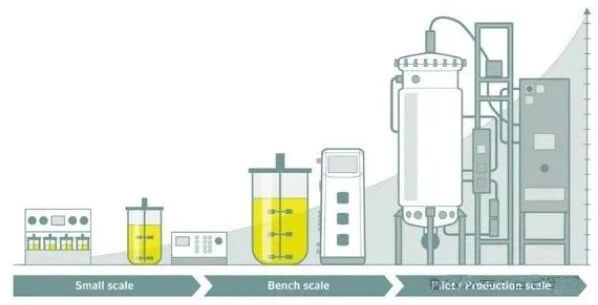
It scales up and improves biotechnological achievements from the laboratory. It aims to achieve large-scale and economically feasible industrial production.
This field focuses on key parts. These parts include fermenter design, downstream separation and purification, and process control. It is an important bridge. It connects scientific research and industrial production. When we scale up laboratory technologies to industrial production, we need to solve a series of technical problems.
For example, we need to optimize the structure and operation parameters of fermenters. This is to make sure microorganisms grow stably and produce efficiently. We need to develop efficient separation and purification technologies. This is to improve product quality and recovery rate. We need to set up precise process control systems. This is to make sure the production process is stable and reliable.
Only through the systematic optimization and improvement of bioprocess engineering can the advanced technologies developed in the laboratory be truly applied in industrial production. This can turn scientific and technological achievements into practical productivity. It can also create great economic and social benefits.

About Ferbio
Ferbio advances intelligent bioreactor technology, building a comprehensive platform for synthetic biology that integrates strain development with industrial-scale production. By establishing a precision fermentation big data cloud, it aggregates vast amounts of reaction data to enable real-time monitoring, analysis, and prediction of fermentation parameters and material changes, enhancing the efficiency and accuracy of synthetic biology research and development, and driving intelligent, efficient, and sustainable growth in the bio-industry.