Royal jelly is called “liquid gold”. It meets synthetic biology. A revolution in making rare ingredients on an industrial scale starts.Royal jelly has 10 Hydroxy-2-Decenoic Acid (10 HDA) in it. People call this acid the “longevity factor”. This unsaturated fatty acid is only 1.4-2.4% of royal jelly. It has many good effects. These effects include anti-aging, anti-inflammatory and antioxidant. So it becomes a core “golden ingredient” in high-end skincare products.
But for a long time, natural extraction has very low yield. It also has high cost. This limits the use of 10 HDA. One gram of naturally extracted 10 HDA costs as much as one gram of gold. So it stays in laboratories and small niche markets.Then 2025 comes. Synthetic biology breaks this problem. It makes large-scale production of 10 HDA possible for the first time. It opens a new chapter for 10 HDA’s industrial use.

Ⅰ. Traditional vs. Synthetic: Efficiency and Cost
The ways to make 10 HDA have changed over time. Natural extraction, chemical synthesis and synthetic biology are different. The main differences are in two key points: efficiency and cost.
1. Natural Extraction: Depends on Weather, Unstable and Inefficient
The traditional natural extraction method needs dozens of kilograms of royal jelly. You can get one gram of high-purity 10 HDA from it. This causes a lot of raw material waste.At the same time, yield is greatly affected by seasons, climate and bee species. Output can be several times different between peak and off-seasons. It cannot meet large-scale demand.Also, natural extracts have protein impurities. These impurities may irritate sensitive skin. This further limits where it can be used.
2. Chemical Synthesis: Many Steps and Big Risks
Early chemical synthesis needs more than 8 complex reaction steps. It produces a lot of by-products and isomers. It also has very big difficulties in purification. So the final yield is less than 30%.More importantly, it is hard to avoid leftover chemical reagents. This makes it unable to meet safety standards in skincare, health products and other fields. So it has little practical use.
3. Synthetic Biology: Accurate, Efficient and Cheap
Synthetic biology finds out how 10 HDA is made at the molecular level. It puts key genes into “chassis cells” like Escherichia coli (E. coli). This makes engineered strains. These strains can make 10 HDA efficiently.These “microfactories” use cheap glucose as raw material. They make a lot of 10 HDA through high-density fermentation technology in bioreactors. The cell concentration is over 10 times that of traditional methods.Finally, it uses GEW high-purity extraction technology. It gets 10 HDA with purity over 98%. The cost is 80% lower than natural extraction.

Ⅱ. Three Steps to Make Synthetic 10 HDA
Making 10 HDA with synthetic biology needs genetic engineering, fermentation engineering and separation purification technology. They work together. It has three key steps:
1. Genetic Editing: Make Exclusive “Production Strains”
Researchers first find key enzyme genes for 10 HDA synthesis. Acyltransferase genes are examples.Then they use genetic engineering technology. They put these genes into E. coli accurately. They change the cell’s metabolic pathway.After screening and adjusting, they get exclusive “production strains”. These strains can make 10 HDA stably and efficiently. This lays the foundation for mass production.
2. Bioreactor: Make Large-Scale Production Possible
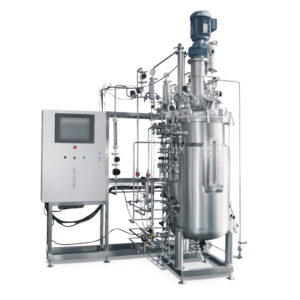
In large bioreactors, staff control parameters carefully. These parameters include temperature, pH value and dissolved oxygen. This creates a good environment for engineered strains to grow and produce.Billions of these strains work like a team. They turn glucose into 10 HDA efficiently. High-density fermentation technology helps. The daily output is a thousand times that of traditional natural extraction. It shows a big scale effect.
3. GEW Purification: Get High-Purity Products
After fermentation, the broth has impurities. These include bacterial residues and metabolic waste.GEW high-purity extraction technology is used. First, membrane separation removes big molecular impurities. Then chromatographic technology separates 10 HDA from small molecular waste accurately.Finally, white crystalline 10 HDA is got. Its purity is over 98%. It meets the quality requirements for high-end use.
Synthetic biology solves the big problem of 10 HDA mass production. It also makes this “liquid gold” ingredient cheap. It is expected to be used widely in skincare, health products and other fields. More consumers can benefit from it.
About Ferbio
Ferbio has plenty of experience making all kinds of bioreactors and pressure vessels. We have a team of experts covering areas like biological reaction, fermentation technology, mechanical manufacturing, and automatic control. Our research and technical skills have always been leading in China and top-tier worldwide. We’ll give you a product experience that’s comfortable, reliable, and worry-free.