
There’s a growing demand for reproducible, scalable, and high-quality cell growth in today’s fast-paced biotech and pharmaceutical industries. Whether organizations are producing therapeutic proteins, vaccines, or stem cell therapies, the cell culture bioreactor is the gold standard for consistent results.
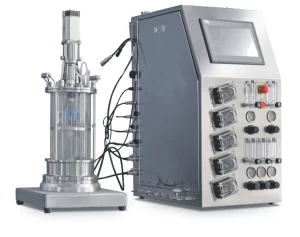
Unlike flasks or plates, a bioreactor cell culture system provides a controlled environment, better nutrient delivery, and scale-up reliability. From laboratory bioreactors used in R&D to single use bioreactors designed for efficiency in GMP facilities, the bioreactors are changing what it means for cell cultivation.
In this blog, you will know why it is important to invest in the right cell culture bioreactor, such as Fermenter China, for optimum cell growth and to stay competitive in the biotechnology field.
Basics: What is a Cell Culture Bioreactor?
A cell culture bioreactor is a controlled vessel which helps in the growth, maintenance, and expansion of cells. Unlike the static flasks or petri dishes that are limited in their scalability, the bioreactor cell culture system enables organizations to grow a large population of cells under controlled conditions. Through controlling temperature, pH, oxygen, carbon dioxide, and nutrient delivery, companies achieve greater reproducibility and efficiency that cannot be reached manually.
So, what is a bioreactor in simple terms? Think of it as the backbone of modern cell cultivation. It ensures that cells receive better functionality and high viability as it mimics the natural working environment of the cells. That’s why cell culture bioreactors are becoming the standard for a wide variety of industries, including pharmaceuticals and cultured meat.
Bioreactors for cell culture come in types, each with its own advantages.
- A lab bioreactor is great for small-scale R&D and process development, allowing scientists to accurately control variables in early experiments.
- In contrast, single use bioreactor designs are currently popular for commercial production because of their efficiency, less chance of contamination, and flexible nature.
- A mammalian cell culture bioreactor is specifically designed for specialized applications with particularly sensitive cell lines, such as CHO cells or stem cells, which require careful handling with shear force stringently controlled.
According to ferm–bio, today’s advanced cell culture bioreactors come with integrated monitoring, automation, and modular features for scalability. This enhances the quality of cells while also reducing operational costs, making them a smart investment that gives companies a head start to speed up innovation and stay compliant.
Types of Bioreactors for Cell Culture
The selection of a cell culture bioreactor usually depends on the type of cells, their developmental stage, and the scale of the product to be produced. Bioreactor designs have significantly evolved over the years, from simple stirring systems to complex systems designed for precision and efficiency. By knowing the essential categories, it becomes easy for the business to choose the right one depending on the end goal.
1. Stirred-Tank Bioreactors
The most common type of design is a stirred tank system or a batch culture system. They possess good mixing properties and oxygen transferring capacity, making them useful for suspension cultures. These are frequently the foundation of commercial bioreactor cell culture processes.
2. Wave and Rocking Motion Bioreactors
Wave bioreactors use rocking platforms and single-use bags to minimize shear stress and cleaning. As a single bioreactor, they are particularly appealing for multi-product facilities and projects with short timelines.
3. Perfusion Bioreactors
With these systems, there is a constant feed of fresh media, while waste products are continuously removed, keeping the cells in optimum condition. Perfusion is often used for high-density cultures or long production runs.
4. Mammalian Cell Culture Bioreactors
It’s important to use a specialized mammalian cell culture bioreactor for sensitive cell lines such as CHO cells, iPSCs, or stem cells. Ferm-bio provides bioreactor solutions with advanced control systems that reduce the shear forces while ensuring a stable supply of oxygen and nutrients.
Due to this, they are ideal for biologics manufacturing, cell therapy development, and vaccine production. The adaptable designs allow businesses to move from laboratory bioreactor systems to full GMP production and to move to increasingly automated, larger-scale systems.
5. Emerging Microfluidic and Modular Bioreactors
Developments such as Microfluidic systems and modular small-scale units are gaining traction in R&D as they allow for fine control in compact designs. While not yet common, these technologies demonstrate where cell cultivation is headed.
Whether it’s R&D teams using a benchtop unit or large pharma companies investing in a robust industrial system, the variety of bioreactors for cell culture assures that there’s a solution for every application.
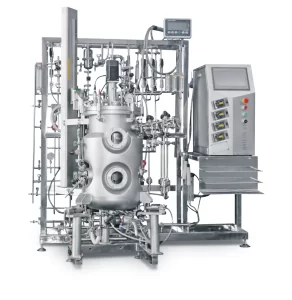
Mammalian Cell Culture Bioreactor: Special Considerations
A mammalian cell culture bioreactor is designed to support the growth of sensitive cell lines such as CHO, stem cells, and iPSCs. These sensitive cell lines are used in biologics, vaccines, and cell therapies. Mammalian cells are not like microbial or plant cells. They are delicate and require a controlled environment to remain viable and productive. For a business that is looking to scale up its production, choosing a good system is of utmost importance as it helps strike a balance between efficiency, compliance regulations, and cost.
Here are the key things to consider when dealing with mammalian cell culture:
- Environmental stability: Mammalian cells require strict control of temperature, pH, and dissolved oxygen. Any minor variation can cause changes to cell growth, protein expression, or the quality of the therapeutic agent.
- Sensitive to shear: Unlike microbes, mammalian cells easily break under agitation. Fermenter China’s modern cell culture bioreactor systems are designed to lower shear forces while providing adequate mixing and oxygen transfer.
- Nutrient and Waste Management: Having the proper nutrients in the right amounts and removing toxic waste helps cells stay alive. With perfusion-enabled systems, feeding and waste removal can occur continuously. Thus, it can assist in long-term cell cultivation.
- Scalability: Processes improved in a laboratory bioreactor must be optimally scaled up to industrial levels. Modular and single use bioreactors help to simplify scale-up and reduce risk and downtime.
- Regulatory Compliance: Biopharmaceutical production must comply with Good Manufacturing Practice (GMP). A robust mammalian cell culture bioreactor offers documentation, monitoring, and validation essentials for meeting regulatory requirements.
By tackling these issues, organizations can ensure that their mammalian cell culture processes deliver consistent, high-quality outcomes, while remaining efficient and in compliance.
Why a Bioreactor is Essential for High-Quality Cell Growth
Quality cell growth is the backbone of biologics, vaccines, and regenerative medicine. In order to meet the modern needs of the biotech industry, traditional culture methods such as flasks and plates do not consistently deliver the control and scalability required. With a cell culture bioreactor, output is scalable, processes are compliant, and cells are able to thrive in controlled conditions.
Here are six reasons why cell culture bioreactors are essential.
1. Controlled Environment
A cell culture bioreactor closely controls important variables such as temperature, pH, dissolved oxygen, and carbon dioxide levels. This control removes fluctuations that often compromise cell health in static cultures. This ensures higher consistency, which is important for research laboratories as well as GMP facilities.
2. Efficient Nutrient and Oxygen Delivery
In flasks, the cells nearer to the surface receive more nutrients and oxygen than the cells deeper in the culture. To overcome this challenge, bioreactors ensure that mixing and distribution is uniform throughout the medium. This results in all-around healthier and more streamlined cell populations.
3. Effective Waste Management
Accumulation of metabolic waste products like lactate and ammonia inhibits cell growth. Modern bioreactors for cell culture include a perfusion system designed to remove waste while replenishing nutrients. This helps to extend your culture longevity and base yields overall.
4. Scalability Across Applications
Bioreactors allow for a continuous scale from small laboratory experiments to industrial-scale production. This scalability maintains process integrity while meeting commercial demand. Single use bioreactor designs ensure faster and cheaper scale-up.
5. Reduced Risk of Contamination
Cells processed using manual culture methods undergo more handling steps, which increases the risk of contamination. Bioreactors, especially closed and single-use systems, help lower this exposure by integrating sterile operations. When there are fewer events of contamination, it leads to greater efficiencies, savings in costs, and more reliable timelines.
6. Compliance and Documentation
Regulatory agencies need validated and reproducible processes backed by good data. Ferm-bio designs advanced systems integrated with monitoring and automatic controls that provide traceable data. Doing this ensures compliance and builds trust with partners and other stakeholders.
Addressing these six parameters has made the cell culture bioreactor an essential component in cell cultivation today, enabling businesses to achieve quality, productivity, and compliance.
Challenges & Trade-Offs
The cell culture bioreactor is effective for scaling and maintaining quality. However, they come with challenges that require careful weighing by businesses. A complete understanding of these trade-offs helps organizations choose the right system, manage risk, and plan investments
Shear Stress vs. Mixing
It is necessary to mix adequately to distribute nutrients and oxygen, but excessive agitation can harm sensitive mammalian cells. Advanced designs offered by Ferm-bio minimize shear while ensuring effective mixing. It is essential to balance these two factors for productivity and cell health.
Oxygen Transfer Limitations
Ensuring a sufficient supply of oxygen becomes difficult as cultures scale up. When large vessels are used, there’s a risk of creating oxygen gradients that affect the growth of cells unevenly. Bioreactors use sparging, agitation, or perfusion to mitigate this issue. However, these methods come with costs and technical trade-offs.
Contamination Risks
Even closed systems face contamination due to media handling and equipment failure that can leak. Using a single bioreactor decreases the number of cleanings, which lowers this risk but increases dependence on consumables. It is the responsibility of each organization to achieve a balance between sterility assurance and cost efficiency.
Operational Costs
Bioreactors for cell culture purposes not only require a large outlay on equipment and consumables but also necessitate skilled personnel to operate the bioreactor. While these costs are offset by greater yields and quicker production, the upfront barrier can be steep for smaller labs. Organizations must plan in advance to align budgets with long-term ROI.
Monitoring and Control Complexity
Modern laboratory bioreactors and industrial systems incorporate state-of-the-art sensors for pH, dissolved oxygen, and cell density. Although this increases clarity in processes, it also increases operational and training complexities. While automation can prove beneficial, it imposes new investment and upkeep.
Regulatory and Validation Requirements
To meet GMP and compliance standards, thorough documentation, validation, and audits are needed. For commercial purposes, these processes may slow down implementation and increase costs — but they are non-negotiable. Using trustworthy suppliers ensures that systems meet requirements & regulations from the start.
By predicting these difficulties, businesses can adjust their bioreactor cell culture techniques to lessen risks and improve performance.
Practical Guidance / Decision Framework
Choosing the ideal cell culture bioreactor is an important choice for firms dealing in biotechnology, pharmaceuticals, or food tech. Your pick directly affects Product Quality, Scalability, and Regulatory Compliance. To make sure that the system meets not only today’s research needs but also those for future production, the businesses must balance technical requirements with financial and operational realities.
Key considerations include:
- Use of Laboratory Bioreactors – Ideal for R&D and pilot projects with precision in small volumes. For commercial production, larger stainless-steel or single-use bioreactor systems provide capacity and efficiency.
- Cell Type – Different cells have unique requirements. One example is that mammalian cells are really sensitive to shear stress. Therefore, a mammalian cell culture bioreactor should provide gentle and controlled growth conditions.
- The capital expenditure and operational costs vary for different systems. The cost of cleaning and validation is lower for single-use models; however, the machine’s consumables price will be higher. On the other hand, the stainless-steel bioreactor model will have a high initial investment.
- Process Requirements – Some processes require a continuous cultivation of the cells (perfusion) while others are better suited for batch runs. A bioreactor for cell culture should match the process to ensure efficiency and maximize yields.
- Regulatory Compliance – Biologic products and therapies need GMP-ready systems for regulatory compliance. Selecting an appropriate bioreactor for your cell culture use helps to avoid expensive retrofits and reduces approval timelines.
- Scalability: Systems that are modular and flexible permit effortless bench-to-production transitions. This reduces risks and accelerates time to market with research moving toward commercialization.
Innovations & Recent Research
The cell culture bioreactor landscape is changing rapidly as bioprocessing continues to seek higher efficiencies, reproducibilities, and scalability. One key innovation is the introduction of smart sensors that constantly monitor dissolved oxygen, pH, metabolites, and other important metrics. This allows for real-time adjustments to reduce variability and increase batch uniformity, which is very important in GMP-regulated environments.
Another new trend is the emergence of automation and AI-driven systems. The automated feeding and monitoring do not require manual intervention, while the machine learning algorithms predict the ideal conditions needed for cell growth. As a result, production times are faster and reproducibility is improved on different runs.
At the same time, 3D scaffolds and perfusion systems can provide a bioreactor cell culture with conditions that mimic the natural environment of tissues to improve cell functionality. In regenerative medicine and advanced therapy development, such approaches are especially useful.
The single use bioreactor has also evolved a lot, with better bag materials for longer runs without compromising sterility. Also, the use of microfluidics and organ-on-chip technologies creates compact, precise platforms for drug discovery and toxicology.
Together, these advances show that today’s modern bioreactor for cell culture has evolved beyond an ordinary vessel; it’s a smart system that can adapt to meet the needs of cell cultures.
Economic & Commercial Impacts
Investing in a bioreactor cell culture system has great commercial benefits. Over time, the costs are lowered due to reduced contamination, improved reproducibility, and shortened production cycles. For a lot of companies, the choice of single use bioreactor provides additional hygienic benefits by eliminating cleaning validation and reducing downtime.
The market impact is equally significant. Rising demand for biologics, vaccines, and cultured foods is motivating businesses to implement scalable cell culture bioreactor systems compatible with market growth. Ferm-bio says that modular and customized solutions will help meet the existing and future requirements.
Regulatory, Quality & Safety Considerations
Employing bioreactors for cell culture involves organizations considering regulatory and quality requirements issues. These factors not only protect the product and end user, but also decide whether or not a therapy or biologic can head to market. Compliance is the bedrock of trust with regulators, investors and patients.
- GMP Standards: Every bioreactor for cell culture must follow stringent Good Manufacturing Practice standards. This means documenting parameters such as temperature, pH, oxygen, and proving that different runs have reproducibility.
- Sterility: During the cell cultivation process, the biggest risk is contamination or sterility. Closed systems and single use bioreactor designs reduce this possibility, safeguarding product quality and patient safety.
- Traceability: Integrated digital supervision ensures that every parameter is adjusted and every outcome produced is logged. This gives regulators and internal quality teams data that’s ready for audit.
- Operator Safety: Staff working with mammalian or sensitive cells require systems designed with biosafety in mind. An adequate safety measure safeguards both manpower and process integrity in an organisation.
As stated by Ferm-bio, certified bioreactor systems simplify audits and regulatory setbacks. This means business can carry on with innovative work while still being 100% compliant.
Future Directions & Opportunities
The future for the cell culture bioreactor is toward smarter, more sustainable systems. Soon, entire production runs will be simulated through AI-powered digital twins, which will help reduce the cost of trial-and-error. The focus is also on sustainability, with innovations solving energy use and recycling single use bioreactor materials.
There are also new frontiers in application. Highly developed systems for mammalian cell cultures are moving away from traditional bioreactor models. Scientists are using these novel bioreactor systems to generate tissues and organs for regenerative medicine purposes. Decentralizing production through distributed manufacturing models could enable portable bioreactors located close to clinics for personalized therapies. These directions confirm that bioreactors will not only underpin today’s growth but also support the future of biotech.
Conclusion
A cell culture bioreactor is more than just equipment; it is the backbone of modern biotechnology that allows for reliable, scalable, and high-quality cell culture. A good system enables compliance and efficiency across the research lab to large-scale manufacturing. The industry is evolving with innovations in single use cell culture bioreactor technology, automations, and advanced monitoring; however, choosing the right partner is equally important.
If you are a business looking for reliable, economical, and scalable solutions, Ferm-bio brings to you a world-class mammalian cell culture bioreactor system specialized for your needs. Their validated GMP-ready solutions ease compliance while increasing productivity.
Take the next step to enhance your research or production. Discover Ferm-bio cell culture bioreactor solutions today and empower your business with the tools to lead tomorrow’s biotechnology breakthroughs.