Pichia pastoris is a type of methylotrophic yeast capable of using methanol as its sole carbon and energy source.and Pichia pastoris has become one of the most widely used eukaryotic expression hosts in biotechnology.
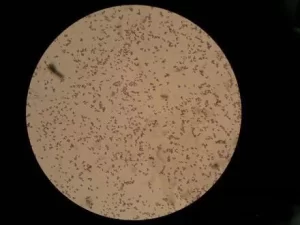
Like other yeasts, P. pastoris exists primarily in a haploid form during asexual growth. When nutrients are limited, two haploid cells of different mating types are often induced to mate and fuse to form a diploid cell,and Pichia pastoris has become one of the most widely used eukaryotic expression hosts in biotechnology.
This article mainly introduces the advantages and disadvantages of Pichia pastoris, the advantages and limitations of the AOX (methanol-inducible) system, the production process, commonly used vectors, multicopy expression strategies, and purification methods.
Another biological characteristic of P. pastoris is that alcohol oxidase (AOX), which is required for methanol metabolism, is sorted into peroxisomes, resulting in metabolic compartmentalization. This compartmentalization is a defining feature of Pichia pastoris expression systems.
When glucose is used as the carbon source, the cells contain only one or a few small peroxisomes. In contrast, when methanol is used as the carbon source, peroxisomes can occupy nearly 80% of the total cell volume, and AOX accounts for approximately 35%–40% of total cellular protein.
Therefore, by inserting a foreign gene upstream of the AOX gene through homologous recombination, very high-level expression can be achieved in Pichia pastoris. Based on the ability of methylotrophic yeasts to form peroxisomes, this system can be used to express toxic proteins or enzymes that are easily degraded. It can also be used to study the biogenesis, mechanisms, and functions of cell-specific compartmentalization, providing insights relevant to similar processes in higher eukaryotes.
Development and Application
In 1969, Koichi Ogata and colleagues first discovered that certain yeasts could utilize methanol as a carbon and energy source (Ogata et al., 1969). Subsequently, the potential of methanol-utilizing yeasts for producing single-cell protein as animal feed attracted widespread attention.
In 1987, Cregg et al. first reported the expression of hepatitis B surface antigen (HBsAg) in methylotrophic yeast, marking the beginning of the development of the P. pastoris expression system.
In 1993, Philip Petroleum Company sold the patent for the P. pastoris expression system to Research Corporation Technologies, which then authorized Invitrogen to commercialize Pichia pastoris-based expression products.
Advantages and Disadvantages
Pichia pastoris does not contain native plasmids; therefore, expression vectors must integrate into the host chromosome via homologous recombination. The foreign gene expression cassette is integrated into the genome to achieve stable expression.
Expression vectors generally include a promoter, a cloning site for the foreign gene, a transcription termination sequence, and selectable markers. These vectors are shuttle plasmids that are first amplified in Escherichia coli and then introduced into Pichia pastoris cells. To enable secretion of the expressed product, the vector must also contain a signal peptide sequence.
Advantages of the AOX (Methanol-Inducible) System
- The AOX1 gene promoter is one of the strongest and most tightly regulated promoters currently available.
- High expression efficiency: foreign proteins can account for over 90% of total expressed protein, facilitating purification.
- High-density cultivation can be achieved in simple synthetic media.
- Expression plasmids can be stably integrated into specific genomic loci as single or multiple copies.
- Since P. pastoris can use methanol as a carbon and energy source and most microorganisms cannot, the risk of contamination is reduced.
Limitations of the AOX System
- Long fermentation cycles.
- Methanol is flammable, explosive, and toxic, posing safety risks.
- Antibiotics used for screening high-producing strains are relatively expensive.
- Culture media and cultivation conditions for Pichia pastoris are not yet fully optimized.
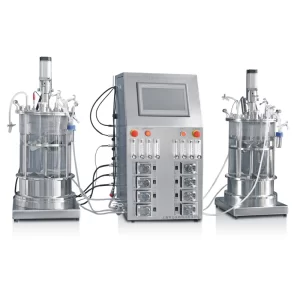
Production Process
- Cell growth and biomass accumulation
- Fed-batch transition phase (glycerol or glucose)
- Induction phase (methanol)
In all stages, the carbon source is supplied as a limiting substrate. Kinetic models of feed rates form the basis for efficient expression in Pichia pastoris fermentation systems.
Commonly Used Vectors
Typical P. pastoris expression vectors contain the promoter and transcription terminator of the alcohol oxidase-1 (AOX1) gene (5′ AOX1 and 3′ AOX1), separated by a multiple cloning site (MCS) where the foreign gene is inserted.
These vectors also contain the histidinol dehydrogenase gene (HIS4) as a selectable marker and the 3′ AOX1 region. When an integrative vector is transformed into the host, its 5′ AOX1 and 3′ AOX1 regions undergo homologous recombination with the corresponding chromosomal loci, resulting in integration of the entire vector along with the foreign gene into the host genome. Expression of the foreign gene is driven by the AOX1 promoter. pastoris itself does not secrete endogenous proteins; therefore, secretion of foreign proteins requires the presence of a secretion signal sequence.
Common host strains include GS115 and KM71, both of which have a HIS4 auxotrophic marker. GS115 contains an intact AOX1 gene and exhibits a Mut⁺ (methanol utilization positive) phenotype, while KM71 has the AOX1 locus disrupted by insertion of the ARG4 gene and displays a Mutˢ (methanol utilization slow) phenotype. Both strains are suitable for standard yeast transformation methods.
Multicopy Expression
Unlike episomal plasmids, integrative expression vectors in Pichia pastoris can vary greatly in copy number. Strains containing multiple copies of a foreign gene generally produce higher levels of protein.
In vivo multicopy integration can be achieved by selecting transformants with high resistance to geneticin (G418), which may indicate multiple insertions. In vitro multicopy integration can be achieved by ligating tandem repeats of the foreign gene expression cassette.
There are two main approaches to obtaining multicopy expression strains:
Natural screening of a large number of transformants using SDS-PAGE, immunoblotting, or colony dot blotting to identify high-producing strains.
Insertion of multiple copies of the expression cassette into a single vector prior to transformation, followed by homologous recombination-mediated integration into the host genome.
Purification Methods
Proteins expressed in yeast systems are generally biologically active and therefore purified using mild conditions. Secreted proteins are particularly advantageous for purification. Typical purification procedures include ammonium sulfate precipitation, followed by ion-exchange chromatography, gel filtration chromatography, and hydrophobic interaction chromatography.
The specific purification strategy should be selected based on the properties of the target protein.
About Ferbio
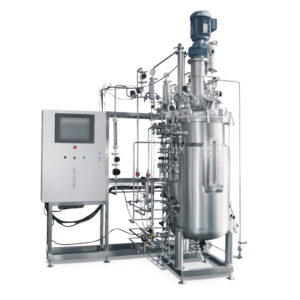
Ferbio has extensive experience in the manufacturing of various reactors and pressure vessels. The company has an expert team specializing in bioreaction systems, fermentation processes, mechanical manufacturing, and automation control. Its research and process capabilities are consistently at the domestic leading level and internationally first-class, providing customers with reliable, safe, and high-quality product experiences.