
The cleaning of the fermentation tank must cover 100% of the interior.
No blind spots allowed.” This is a requirement often mentioned by many customers in their demands for fermentation tank cleaning. It sounds perfect. It is almost impossible to achieve in practice. Many people fall into the misconception. They think “water flow coverage means cleanliness.” It is like using a water hose to wash a wall. It is ineffective in removing oil stains.
The core requirement of GMP is “acceptable residual levels.” It must be supported by hard data. Examples are wiping samples and TOC testing. Do not rely on the fluorescent display of riboflavin tests. Blindly pursuing full coverage in fermentation tank cleaning will be in vain.

The incomplete cleaning of the fermentation tank is essentially a result.
It is caused by physical laws and structural design. The tank is equipped with multiple layers of stirring paddles. It also has cooling coils, baffles, sensor sleeves and so on. These parts create numerous “dead zones” in fluid mechanics. Water flow is prone to bypass these areas. It is difficult to reach the back or bottom.Even with high-pressure rotating spray balls for fermentation tank cleaning.
The lower edge of the stirring paddles and the bottom surface of the coils often still have residues. More than twenty riboflavin tests have been done. The results are highly consistent. This is not due to equipment malfunction. It is a physical limitation determined by the structure that affects fermentation tank cleaning. It cannot be violated.
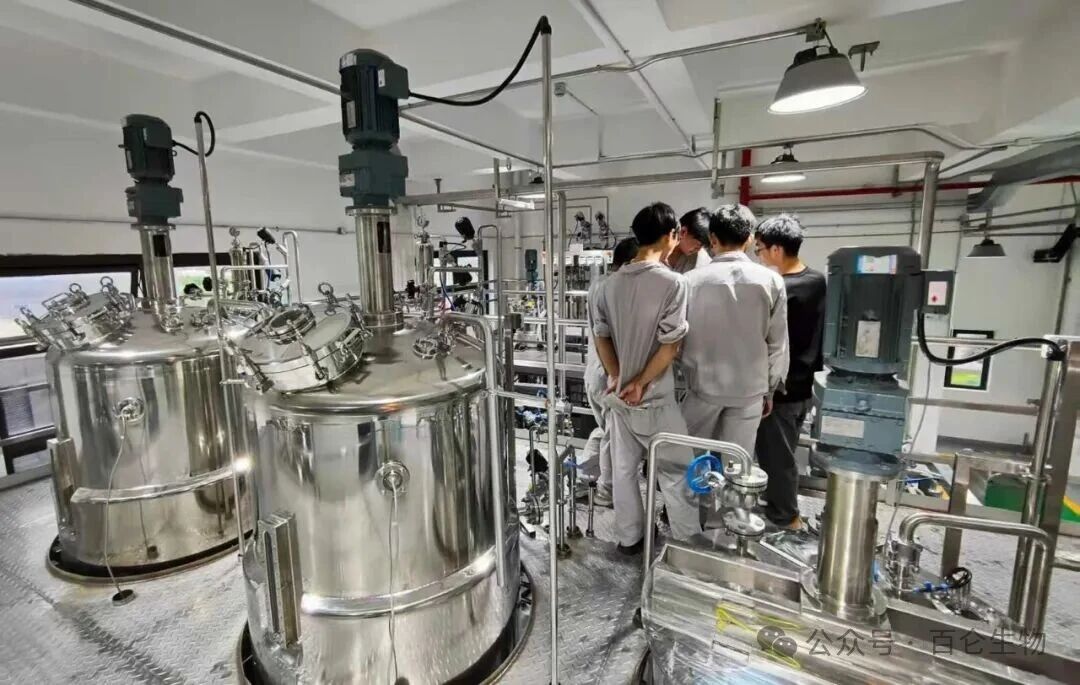
100% coverage for fermentation tank cleaning is unrealistic.
Focusing on key areas is a more practical approach. The upper surface of the top mixing paddle should be regarded as the “passing line” for cleaning. This area is easily covered by the spray ball. If this area is not cleaned thoroughly. It indicates a defect in the design of the entire cleaning system. More importantly. Residues on the upper part are prone to contaminate the next batch of products. They can be carried by foam or exhaust. The risk coefficient is the highest. Guarding this core area is far more meaningful than shouting the slogan of “full coverage.” It can also provide more precise control over production risks.
You may face dead-end areas that cannot be reached during fermentation tank cleaning.
Do not forcefully contend with water flow. Change the approach. Use chemistry and time to solve the problem. The high-temperature alkali boiling method works like this. Fill the tank body with a 1-2% NaOH solution. Soak it at around 80°C for more than 30 minutes. Stir at a low speed. This promotes penetration. A regular CIP cleaning is done first.
Add an additional 10-15 minutes of liquid retention stage. It can specifically handle dry and stubborn stains. Stubborn residues are difficult to remove by water flow. They can be efficiently cleaned by the corrosive power of chemical agents. Time also plays a role with its penetration ability. This is an effective approach. It has been verified through practice.
Small tanks in the laboratory do not require a complex fully automatic CIP system.
It is costly. It is ineffective. It takes up a lot of space. Many units have configured it. They still need manual re-wiping afterwards. A more practical approach is available for fermentation tank cleaning. Use quick-opening tank covers. They allow easy visual inspection. Combine with handheld high-pressure water guns. Rinse precise areas that are dirty. pH electrodes and temperature sleeves are included. Directly remove them and soak. Cleanliness has nothing to do with the degree of automation. The key lies in two points. It must be in line with the actual scenario. The operation must be meticulous and conscientious.
About Ferbio
Ferbio promotes the intelligence of bioreactors, builds a big model for biological reactions and an end-to-end platform for synthetic biology covering “strain-to-industrial production”, and establishes a big data cloud platform for precision fermentation. It gathers massive reaction data, real-time monitors, analyzes and predicts fermentation parameters and substance changes, improves the efficiency and accuracy of synthetic biology R&D, and drives the intelligent, efficient and sustainable development of the biological industry.