Companies in the pharmaceutical, food, and biofuels industries all face the same problem: how to make more, waste less, and stay ahead of the competition. A packed-bed bioreactor takes on that problem head-on.
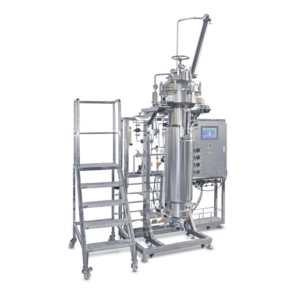
This design allows for a high cell density and long, stable operation, which is what businesses need. Still, a lot of people in charge are unsure of where it fits best or how it works better than traditional fermenters.
In this article, we look at the best uses of packed-bed bioreactors in three major industries. We give real-world examples and explain why these systems are becoming the preferred choice for modern bioprocessing.
Key Principles & Designs of a Packed Bed Bioreactor
A packed-bed bioreactor is like a cylinder filled with small solid particles, like beads, fibers, or porous materials, where microorganisms or enzymes stay in place instead of moving freely in liquid.
The solid particles make a stable support where cells can attach and grow. Nutrients and gases can move through the bed.
In short, a bioreactor definition is a controlled space for biological reactions.
Types of Packed Bed Designs
Packed bed systems come in a lot of different styles, but the basic idea stays the same. Each style is best for a different type of industry:
- Aerobic vs anaerobic: Some processes need a steady supply of oxygen, while others need to be free of oxygen.
- Solid-state vs liquid or trickle-bed: In solid-state fermentation, moist solids serve as the substrate with minimal free liquid, which is typical in enzyme production. Trickle-bed and liquid-packed designs keep a thin layer of liquid moving across the solid media to make sure that nutrients are delivered more evenly.
- Continuous, fed-batch, or batch operation: For long-term production, the continuous mode keeps fresh medium flowing and product streaming out. Fed-batch adds nutrients slowly to make the run time longer, but batch mode is easier and works better for short campaigns or pilot studies.
Engineers can use these options to make the reactor work with the biological system, like making drugs from microbes or using enzymes that are stuck in place to break down food.

Key Design Parameters and Scale Considerations
Some of the important things when designing a packed bed bioreactor include:
- Media support: The way cells stick and fluids move through depends on the material, shape, size, and porosity.
- The pressure drop and contact time depend on the bed’s height, diameter, and packing density.
- Controlling the temperature: The environment in a bioreactor cell culture generates metabolic heat. Jackets, internal coils, or external heat exchangers can help you get rid of it and keep cells in their best range.
- In solid-state fermentation, where drying can stop growth, it’s very important to keep an eye on moisture and humidity.
- Problems with scaling up – When you move from a small lab column to a pilot or full-scale industrial fermenter, you need to rethink how you distribute fluids, transfer oxygen, and clean the equipment to keep it working well.

Applications in the Pharmaceutical Industry
The pharmaceutical industry has embraced the packed bed bioreactor for good reason: it allows high-value biological products to be made efficiently and consistently.
Making Biopharmaceuticals Using Enzyme Systems and Immobilized Cells
Cells or enzymes often need to stay stable and active for long periods of time when making biopharmaceuticals.
A packed bed bioreactor is the best choice because the cells are attached to a solid support, which makes the environment stable and keeps it from washing out even when the bioreactor is running all the time.
- Making enzymes for industry and medicine – Proteases, lipases, and therapeutic enzymes are some of the enzymes that can be immobilized. The cells or enzymes can be used again and again in different production cycles because they are held in a fixed matrix. This cuts costs and makes the process more consistent.
- Antibodies, vaccines, and growth factors – Cells from mammals or insects that make monoclonal antibodies and viral vaccines are sensitive to stress from machines. In a packed bed, they are in a safe place where they can still get nutrients and oxygen. The fixed bed also makes it easier to keep these products in a sterile environment.
The thing is, with packed bed bioreactors, companies can run long production campaigns without having to stop to clean or reseed often if they keep biomass in place and keep feeding it nutrients.
Compared to many stirred-tank systems, this cuts down on downtime and boosts overall yield.
Perfusion Culture and Immobilized Mammalian Cell Culture
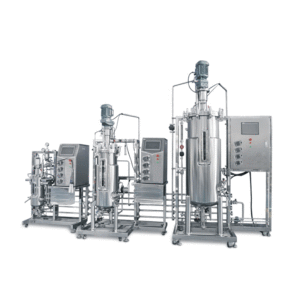
Perfusion culture is an important part of making therapeutic proteins today. This method keeps fresh medium flowing through the reactor while getting rid of waste. This way of doing things works best with a packed bed bioreactor.
- High cell density: The cells grow to much higher densities than they would if they were in suspension because they stick to the support matrix.
- Less shear damage. There are no impellers or strong mixing forces, which keep delicate mammalian cells safe.
- Long continuous operation: Facilities can keep one reactor running for weeks or months, collecting product every day.
Biosynthesis of Fine Chemicals, Secondary Metabolites, and API Precursors
Microbial fermentation produces a lot of small-molecule active pharmaceutical ingredients (APIs) and complex natural products, in addition to big proteins and vaccines.
A packed bed bioreactor has a lot of benefits when growing fungi, bacteria, or actinomycetes that make:
- Antibiotics like penicillin or erythromycin
- Alkaloids and plant-based substances are utilized in cancer treatments
- Specialized metabolites such as vitamins, steroids, and hormone precursors
Engineers can keep the high cell concentrations needed for maximum yield by keeping the organisms that make the product in a stable bed.
The fixed matrix makes it easier to separate things later on, and continuous feeding keeps the nutrients at the right levels. The cells stay where they are, which makes it easier and cleaner to get the product from the liquid phase.
Key Takeaways for the Pharmaceutical Sector
- Quality and consistency
- Lower costs of doing business.
- Scalability
Applications in Food & Beverage Processing Industries
Food and drink makers are always looking for ways to make their products taste the same, get more out of them, and keep costs down.
A packed bed bioreactor meets that need by letting nutrients flow through while supporting a lot of microbial or enzyme activity on a solid surface.
Solid-State Fermentation (SSF) for Food and Food Ingredient Production
One of the oldest uses for a packed bed bioreactor is solid-state fermentation, which is still an important part of making modern ingredients.
In SSF, microorganisms grow on a solid surface that is wet instead of in a liquid that flows freely. This method works best when the bed is fixed.
- Enzyme production – Amylases, proteases, and cellulases are examples of industrial enzymes that are needed to make bread, beer, and fruit juice. In a packed bed, the cells stay attached to the solid substrate, so these enzymes can be made in large amounts and used for many cycles.
- Flavor compounds and organic acids – SSF makes it easy to make flavor compounds and organic acids, such as citric acid and lactic acid, as well as other compounds that make food taste better.
Because the biomass doesn’t wash out, businesses can run campaigns for longer periods of time without having to start and stop them as often. This saves money and makes the batches more even.
Fermented Foods and Cultural Food Products
A packed bed bioreactor works similarly to how cultures used to ferment things. Modern large-scale producers use controlled packed bed systems to change these old ideas:
- Yogurt and soft cheeses– Starter cultures that are stuck in place can ferment milk all the time, which means there is always enough, and there is less need for repeated inoculations.
- Specialty fermented vegetables or soy products – packed beds keep the moisture and air flow right to keep the flavors consistent and reduce spoilage.
Immobilized Cell or Enzyme Reactors for Food Processing
A packed bed bioreactor is also a workhorse for continuous food processing. Beads or fibers hold enzymes and living cells in place, letting liquids pass through and change without losing the active biocatalysts.
- Lactase for lactose-free products: Milk flows through a column filled with beads that are bound to lactase, which breaks down lactose as it goes through and makes dairy products that don’t contain lactose without any extra steps.
- Probiotic cultures and flavor enhancement: When lactobacilli are immobilized, they can turn sugars into lactic acid during the continuous production of beverages. This keeps the acidity and taste the same.
- Other specialized conversions. Immobilized enzymes speed things up and cut down on waste in everything from brewing to clarifying fruit juice.
Key Advantages for the Food Industry
- Biocatalysts that are stable and can be used again.
- Continuous processing is great for big factories that need to keep making things all the time.
- Consistent flavor profiles because the temperature and humidity are always the same.
- Easy to add to existing lines: Packed bed modules can be added to lines that already have fermentation tools or even used with a fermenting starter kit in pilot tests before they are fully rolled out.
Applications in Biofuels & Biorefineries
A common problem for renewable energy producers is how to turn raw biomass into clean, usable fuel at a price that is competitive.
A packed bed bioreactor is a good way to keep enzymes or microbes in one place while gases or liquids move through. This means you can always make a lot of fuel.
It has a lot of cells, which makes it easy to collect products, and it costs less to run, which are all things that biofuel plants need.
Solid Biomass Conversion and Lignocellulosic Feedstocks
Corn stover, wheat straw, and sugarcane bagasse are types of agricultural waste that are high in cellulose and hemicellulose but hard to break down.
This problem can be fixed with a packed bed bioreactor that uses solid-state fermentation. It has a stable base that holds microbes that make enzymes.
- On wet solid surfaces, Trichoderma reesei and other fungi are good at making cellulases and hemicellulases. These enzymes break down living things. After that, these enzymes break down tough plant fibers into sugars that can be turned into fermentable sugars.
- How to prepare for treatment: The reactor can also use steam or weak chemicals to break down the biomass’s structure so that enzymes can do their job. This means you won’t need as many expensive outside systems to get ready.
Ethanol, Butanol, and Biodiesel Production
When sugars are ready, they need to be turned into liquid fuels. Again, the packed bed bioreactor is the best for this.
- Ethanol and butanol – Yeast that has been immobilized or bacteria that make solvents ferment the sugars all the time as the medium flows through the packed column. Continuous operation means that the volumetric productivity is higher than with traditional stirred tanks.
- Biodiesel – Transesterification of plant oils using immobilized lipase enzymes fits well in a packed bed. The oils go through the enzyme-packed matrix, where triglycerides turn into fatty acid methyl esters (biodiesel) with very little enzyme loss.
This setup makes it easier to get the products back: the fuel streams leave the reactor ready to be purified, and the biocatalysts stay in place so they can be used again and again.
Algal Biomass, Biogas, and Waste-to-Fuel Systems
Not all fuels that can be used again come from lignocellulose. Algae and organic waste streams are both good options, and a packed bed bioreactor works well for both.
- Growing algae on supports: Some designs let microalgae stick to fibers or beads while water rich in nutrients flows around them. With this method, you get a lot of biomass that can be turned into bio-oil or methane later.
- Anaerobic packed beds for biogas. Anaerobic bacteria that are stuck in place break down wastewater or agricultural waste, releasing biogas that is high in methane. The fixed bed keeps slow-growing methanogens from washing out, which keeps the gas output stable even when the feedstocks change.
- Waste that can be turned into fuel that works together. Anaerobic packed beds can be used to treat food-processing waste or organic waste from cities and get energy back at the same time. This helps plants reach their goals for being sustainable.
Why It Matters for Biofuel Businesses
- Lower production costs.
- More productive: Immobilized cells stay active longer, which makes it easier to turn sugar into energy.
- Flexibility: The same equipment can work with enzymes, yeast, algae, or anaerobic bacteria, so it’s easy to change direction when the market changes.
- Scalable design
Packed Bed Bioreactors: Reliable Power for Modern Industry
Packed bed bioreactors are useful for a wide range of tasks, including making enzymes and medicines, increasing food production, and making biofuels.
They work by holding cells or enzymes on a solid surface, which helps the process stay steady and run for a long time.
Sure, they can face issues like uneven airflow or clogging, but good design and careful monitoring usually fix those problems.
For companies that want reliable output and consistent quality, these systems are a smart, flexible option.
Scale with Confidence Using Ferbio Solutions
Packed bed bioreactors have big advantages: steady output, high productivity, and the flexibility to work in many industries. But to get those results, you need equipment you can trust.
Ferbio offers everything from advanced fermenters to complete bioreactor systems, so you can build a process that fits both today’s needs and future growth.
Whether you’re adding to a pharmaceutical plant, upgrading a food facility, or starting a biofuel project, our machines are built to give consistent, reliable results.
Visit Ferbio product page to see how our fermentation technology can help you grow your operation with ease.