
People who’ve worked on-site know: what’s the worst thing about winter?
It’s not the cold. It’s frozen pipes.
Some materials are special. They thicken when the temperature drops. They may crystallize. They can even clog pipes completely.
At times like this, heat tracing isn’t just an “optional” auxiliary measure. It’s a critical part of protecting production and safety.
There are two main methods today. They are electric heat tracing and jacketed heat tracing.
Which one to choose? Don’t just follow what others use. You need to check what’s flowing through your pipes. You need to know the required temperature. You also need to see if the on-site conditions allow it.
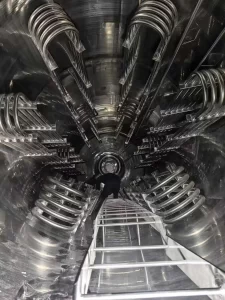
Electric Heat Tracing: Convenient, But Don’t Cut Corners
Nowadays, when many people hear “heat tracing,” their first thought is “stick on an electric heating cable on the Pipes.”
It’s true. Electric heat tracing is quick to install. It’s flexible to control. It’s especially suitable for small-diameter pipelines. It works well for instrument impulse lines. It’s also good for occasions where overheating is a major concern. For example, some organic solvents decompose at high temperatures. They may smoke. They can even catch fire.
But there are a few pitfalls to avoid:
Don’t take the manufacturer’s claim of “max 120°C” at face value. Check the maximum allowable temperature of your medium. Suppose a material starts to deteriorate at 60°C. The heating cable can withstand 150°C. You still must use a low-temperature type. You also need to add a temperature controller.
Insulation is a must. Too many people wrap the heating cable and turn it on “for emergency use.” The cable burns out a few days later. Without insulation, all the heat escapes into the air. The heating cable works overtime to heat up. It finally fails due to overheating.
Don’t skimp on power supply. Use special junction boxes in humid areas. Use them in explosion-proof areas too. The power supply should preferably have a separate circuit. Don’t mix it with other equipment. You won’t find the cause when a power trip happens.
In addition, many electric heat tracing manufacturers offer complete solutions. You provide the drawings. They calculate heat loss. They create a list. They even mark how to bend the cables.
But you still need to coordinate electrical interfaces. You need to handle distribution boxes and other parts. Don’t assume a “turnkey solution” means you can ignore everything.
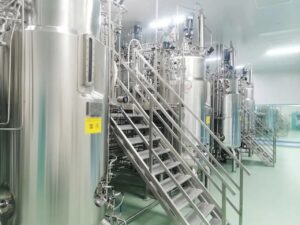
Jacketed Heat Tracing: An Old Method, But Reliable
Some media can’t flow at all in winter. Electric heat tracing is often ineffective for them.
That’s when jacketed pipes are needed. A second pipe is wrapped around the main pipe. Steam or hot water flows through the gap. It provides uniform heating. The results are much more stable.
However, jacketed pipes come with more hassle:
Be careful with material matching. The inner pipe and outer jacket have expansion coefficients. If they differ too much, the welds may crack. Temperature changes cause this. There was a project. Carbon steel inner pipes were paired with stainless steel jackets. Three months after startup, flanges leaked in multiple places.
Don’t make the length too long. It’s generally recommended that each section be no longer than 6 meters. Add distance plates in the middle. They keep the inner pipe centered. The inner pipe may shift without them. Steam takes a shortcut. Some areas will still stay cold.
Ensure smooth drainage. For horizontal pipes, steam enters from the top. Condensed water drains from the bottom. Install isolation valves at both the inlet and outlet. The entire line will have to be shut down during maintenance otherwise.
One more detail: Use flange connections for steam cross-pipes between jackets as much as possible. They’re more expensive. But they make future disassembly and repair easier. You may opt for full welding to save money. You’ll struggle to cut the pipelines if there’s a leak someday.
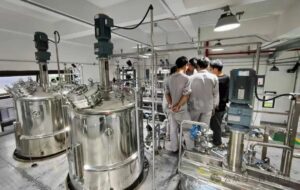
“Clever Tricks” in Installation Are Often Major Hidden Dangers”
Don’t weld tracing pipelines directly to the main pipe. This is repeatedly emphasized in old standards. Construction teams still do it to save time. There are consequences. First, thermal stress concentrates. Second, you’ll have to cut the main pipe too when replacing the tracing pipe later.
Don’t skip supports. Some areas are concentrated, like distribution plates and collection plates. A fixed support plus a sliding support is the basic configuration. Thermal expansion and contraction will shift the pipelines without them. The joints will crack.
Don’t ignore anti-corrosion isolation. For example, a carbon steel tracing pipe is tied to a stainless steel main pipe. Electrochemical corrosion will happen quickly in humid environments. Place a plastic sheet between them. Or wrap tape around. It costs almost nothing. But it saves a lot of trouble.
Heat tracing systems may seem insignificant. But every winter, many things go wrong. Shutdowns happen. Leaks occur. There are even safety accidents. These are due to unreasonable heat tracing design. Or shoddy construction.
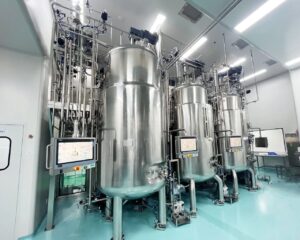
About Ferbio
Ferbio promotes intelligent and smart bioreactor systems, develops bioreaction large models, and builds an end-to-end platform for synthetic biology covering “strain development – industrial production”. It establishes a precise fermentation big data cloud that aggregates massive reaction data, enables real-time monitoring, analysis and prediction of fermentation parameters and substance changes, improves the efficiency and accuracy of synthetic biology R&D, and drives the intelligent, efficient